

- 07/06/2025
- Posted by: phucthien
- Categories: Base Materials & Construction, Blog, Wigs & Full-Cap Hairpieces
5 Human Hair Wig Density Chart: Choosing the Right Thickness
Understanding the wig density chart is essential for selecting the hair thickness that complements your style and preferences.
Understanding Wig Density: The Foundation of a Natural Look
Wig density refers to the amount of hair attached to the wig cap.
- Why Wig Density Matters: Natural Appearance: The right density mimics the look of natural hair growth. Too little density can look sparse, while too much can appear bulky and unnatural.
- Factors Influencing Wig Density Choice: Natural Hair Density: Consider your own hair density (if you have natural hair). A wig density similar to your own will often look the most natural.

Deciphering the Wig Density Chart: A Comprehensive Guide
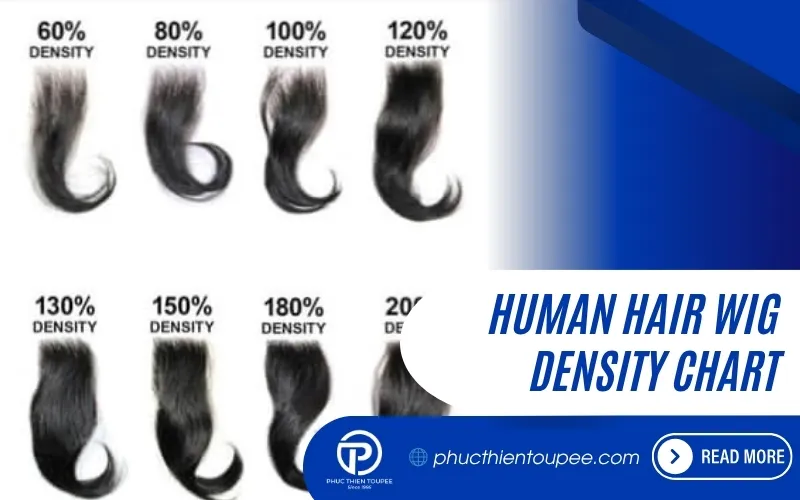
A wig density chart provides a visual representation of different density levels, allowing you to see how much hair is on a wig at each percentage.
- 1. Light Density (90% – 110%): Appearance: Very light and sparse, mimics the look of fine or thinning hair.
- 2. Light to Medium Density (120% – 130%): Appearance: Natural-looking with a bit more volume than light density. Ideal For: Most people with average hair density.
- 3. Medium Density (150%): Appearance: Noticeably fuller than light to medium density, with ample volume.
- 4. Medium to Heavy Density (180%): Appearance: Very full and voluminous, with a noticeable amount of hair.
- 5. Heavy Density (200%+): Appearance: Extremely full and thick, with a very dense concentration of hair.

Choosing the Right Wig Density: A Step-by-Step Guide
Selecting the perfect wig density is a personal journey.
- Step 1: Assess Your Natural Hair (or Define Your Desired Baseline): Understanding your starting point, or the look you aim to achieve, is fundamental.
- Step 2: Define Your Desired Hairstyle & Volume Level: The way you intend to style your wig heavily influences the necessary density. More hair offers more styling possibilities but requires the right density to look balanced.
- Step 3: Consider Your Facial Features & Head Size: A wig should frame and flatter your face, not overwhelm it. Petite Features or Smaller Head Circumference: Lower to medium densities (120%-150%) are often more flattering.
- Step 4: Evaluate Lifestyle and Climate Comfort: Practicality is key for everyday wig wear. Hot and Humid Environments: Lower densities (120%-130%) allow for better air circulation around the scalp, feeling significantly lighter and cooler. Active Lifestyle (Gym, Outdoors, Physical Work): Lighter density (120%-130%) wigs are generally more comfortable due to reduced weight and heat.
- Step 5: Utilize the Wig Density Chart & Consult with Phuc Thien Experts: Refer to the Chart: Revisit the wig density chart provided earlier. Based on your assessments in steps 1-4, identify the density range that seems most appropriate.

Wig Density and Hair Type: Finding the Perfect Match
The best wig density also depends on the hair type used in the wig.
- Human Hair Wigs: Benefits: Most versatile, natural-looking, and can be styled with heat.
- Synthetic Wigs: Benefits: More affordable and require less maintenance than human hair wigs. Density Considerations: Synthetic wigs tend to be more voluminous than human hair wigs at the same density percentage.

Maintenance Tips for Wigs of Different Densities
Proper maintenance is crucial for preserving the beauty, feel, and lifespan of your human hair wig. While core principles apply universally, the density of your wig introduces specific nuances to the care routine.
- Foundational Care Principles (Applicable to All Densities): Typically, wash every 7-10 wears, or sooner if there’s significant product buildup, odor, or loss of style. Products: ALWAYS use high-quality, sulfate-free shampoos and conditioners specifically formulated for color-treated human hair or human hair wigs.
- Density-Specific Maintenance Considerations: Higher density means more hair, which impacts washing time, product usage, drying time, and detangling effort.
Phuc Thien Toupee: Your Partner in Finding the Perfect Wig
At Phuc Thien Toupee, we understand that choosing a wig can be a daunting task.
- Expert Consultation: Our team of experienced wig stylists is available to answer your questions and help you find the perfect wig density, style, and color.
- Wide Selection: We offer a wide selection of wigs in various densities, lengths, colors, and styles to suit every taste and budget.
5. Heavy Density (200%+)
| Wig Density | Appearance | Ideal For | Pros | Cons |
| 90%-110% | Very Light and Sparse | Those with Fine/Thinning Hair | Lightweight, Comfortable, Easy to Style | May not Provide Enough Coverage for those with Significant Hair Loss |
| 120%-130% | Natural-Looking with More Volume | Most People with Average Hair Density | Versatile, Comfortable, Provides Good Coverage | May not be Suitable for Very Full/Voluminous Styles |
| 150% | Noticeably Fuller with Ample Volume | Those who Want More Volume/Thick Hair | Provides Full, Healthy Look, Can Handle More Complex Styles | Can be Slightly Heavier than Lower Density Wigs |
| 180% | Very Full and Voluminous | Those who Love Big/Bold Hairstyles | Creates Dramatic, Glamorous Look, Can Withstand Heavy Styling | Can be Heavy and May Require More Maintenance |
| 200%+ | Extremely Full and Thick | Stage Performers/Cosplayers | Creates a Statement Look, Can Handle Extreme Styling | Can be Very Heavy, Hot, and Difficult to Manage |