

- 31/05/2025
- Posted by: phucthien
- Category: Blog

Hair systems for vertex hair loss offer a fantastic solution for those experiencing thinning or baldness at the crown of their head. If you’re seeking a non-surgical and effective way to restore a full, natural-looking head of hair, vertex hair systems are a worthwhile option.
This comprehensive guide will explore the best options available, helping you make an informed decision to revitalize your appearance and boost your self-esteem. Crown hairpieces, scalp prosthetics, non-surgical hair restoration.
Understanding Vertex Hair Loss
Vertex hair loss, also known as crown balding, is a common type of hair loss that affects both men and women. It typically begins with thinning at the crown (vertex) of the head and can gradually progress to more extensive baldness.
Causes of Vertex Hair Loss
Several factors can contribute to vertex hair loss:
- Genetics: Heredity plays a significant role. If your parents or grandparents experienced vertex balding, you’re more likely to as well.
- Hormonal Changes: Dihydrotestosterone (DHT), a hormone derived from testosterone, is a primary culprit in pattern baldness. DHT shrinks hair follicles, leading to thinner, shorter hair and eventually cessation of growth.
- Age: Hair loss naturally increases with age as hair follicles become less active.
- Medical Conditions: Certain medical conditions, such as thyroid disorders or autoimmune diseases, can contribute to hair loss.
- Medications: Some medications, including those for high blood pressure and depression, may have hair loss as a side effect.
- Stress: While stress isn’t a direct cause of pattern baldness, it can exacerbate existing hair loss conditions.
- Lifestyle: Poor nutrition, smoking, and excessive styling with heat tools can damage hair follicles and contribute to hair loss.
✂️ Be unique — create your custom-made toupee today!
Identifying Vertex Hair Loss
Early signs of vertex hair loss can be subtle:
- Thinning at the Crown: The hair at the crown of your head may appear thinner than the rest of your hair.
- Widening Hair Part: The part in your hair at the crown may appear wider than usual.
- Increased Scalp Visibility: You may notice more of your scalp showing through your hair at the crown.
- Difficulty Styling: It may become harder to style your hair to cover the thinning area.

Targeted solutions: Combat Hair System for Thinning Crown and Hair System for Receding Hairlines
Top 7 Hair Replacement Systems for Vertex Hair Loss
Choosing the right hair system is crucial for achieving a natural look and comfortable fit. Here are seven of the best hair replacement systems specifically designed for vertex hair loss, considering factors like material, base construction, and application method. As Phuc Thien Toupee, we want you to feel confident in your decision.
1. Lace Front Hair Systems (with Lace or other material at the Vertex)
- Detailed Description: While often known for their front hairline realism, lace systems can incorporate lace material across the entire base, including the vertex, or use lace at the front combined with another material (like monofilament or thin skin) at the crown. The fine lace mesh allows the scalp to breathe and offers a very flat, natural appearance where hairs seem to grow right from the scalp. Hairs are typically hand-tied to the lace, often with bleached knots at the front for maximum invisibility. For the vertex, the hand-tying allows for multi-directional hair placement, mimicking natural growth patterns.
- Pros Expanded:
- Unmatched Natural Hairline: Crucial even when focusing on the vertex, as the system needs to blend seamlessly with existing frontal hair.
- Superior Breathability: Especially important for the crown area which can get warm. Reduces sweat buildup and increases comfort for long wear.
- Lightweight Feel: Adds to overall comfort, making it feel less like wearing a hairpiece.
- Styling Versatility: Hair can be parted and styled more freely, including mimicking a natural crown whorl.
- Cons Expanded:
- Delicate Nature: The fine lace requires careful handling during application, removal, and cleaning to prevent tearing or fraying.
- Maintenance Needs: Knots may need periodic re-bleaching (if applicable), and the lace itself needs gentle cleaning to avoid damage. Requires more frequent replacement than more robust bases.
- Adhesive Considerations: Liquid adhesives are often preferred for the most invisible bond, which requires more careful application.
- Best For: Individuals prioritizing the most natural look possible, especially if blending into existing frontal hair is key. Good for those in warmer climates or who prefer a lighter feel. Suitable for those willing to invest time in careful maintenance or opt for professional servicing.
- Vertex Specific Suitability: Excellent for mimicking scalp appearance and natural hair directionality at the crown. The breathability is a significant comfort factor for this area.

2. Monofilament Hair Systems (Full or Partial Mono)
- Detailed Description: Monofilament (‘mono’) bases use a fine, nylon-like mesh, typically flesh-toned. Hairs are individually hand-tied onto this mesh. This construction allows the wearer’s scalp color to show through, creating a very realistic scalp appearance. The hand-tying allows for natural movement and parting anywhere within the mono section. Systems can be full mono or combine mono at the top/vertex with polyurethane (PU) perimeters for easier tape/glue application.
- Pros Expanded:
- Realistic Scalp Illusion: Excellent for the vertex where the scalp might be more visible when hair parts.
- Natural Hair Movement: Hand-tying allows hair to pivot naturally, mimicking real growth.
- Good Durability: Generally more durable than full lace systems, offering a longer lifespan.
- Parting Flexibility: Hair can be parted in any direction within the monofilament area, crucial for styling the crown.
- Cons Expanded:
- Reduced Breathability vs. Lace: While breathable, it’s generally less airy than lace, which could be a factor for some users.
- Potential for Stiffness: Depending on the specific mono material, some can feel slightly stiffer than lace.
- Cost: Often more expensive than basic PU systems due to the labor-intensive hand-tying.
- Best For: Individuals seeking a balance between a realistic scalp appearance and good durability. Excellent for those who like to change their parting or hairstyle frequently.
- Vertex Specific Suitability: Superb at replicating the look of hair growing from the scalp at the crown. The durability is beneficial for an area that might experience friction from headrests or sleeping.
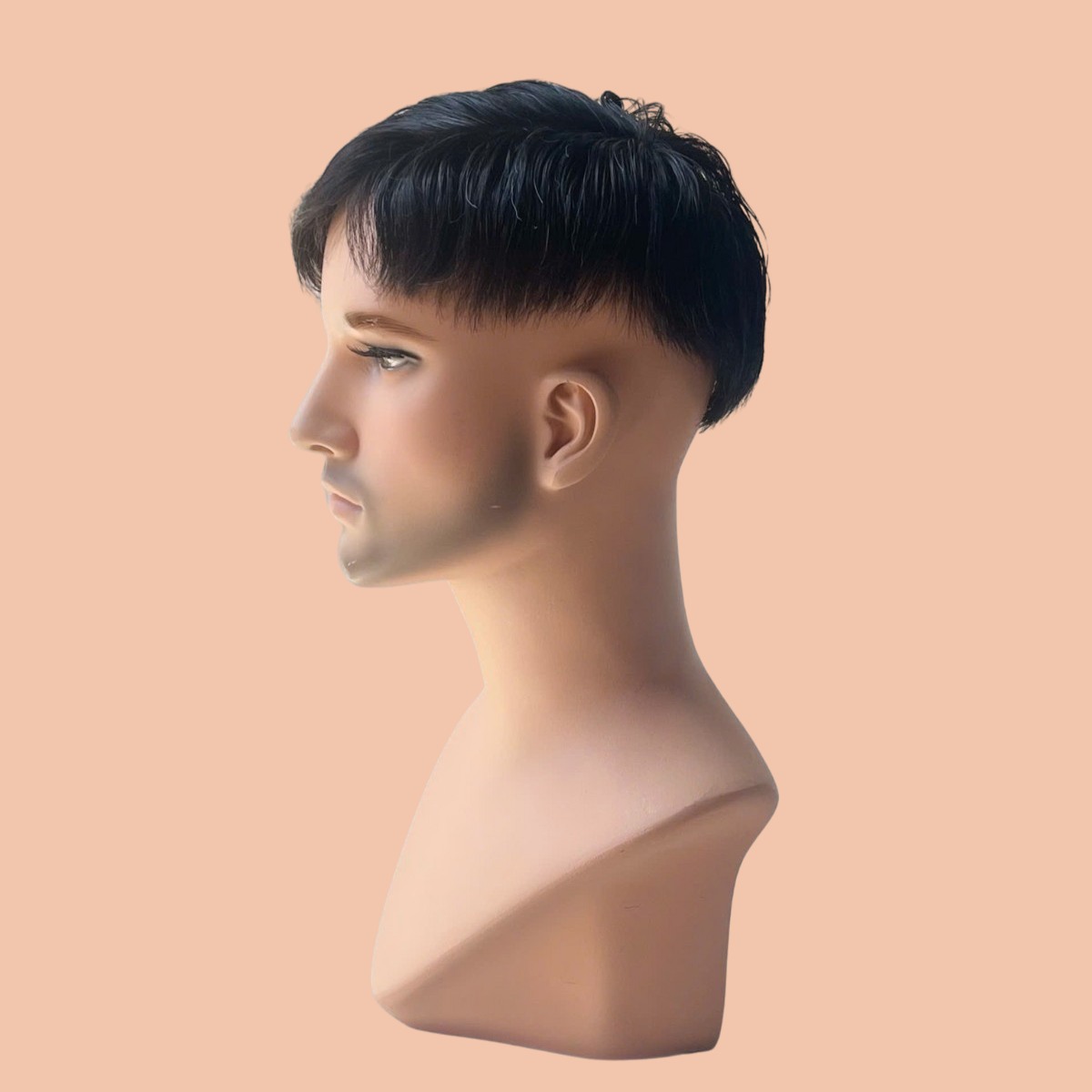
3. Skin Graft Hair Systems (Polyurethane – PU):
- Detailed Description: These systems utilize a very thin layer of polyurethane that mimics the appearance and feel of skin. The base adheres closely to the scalp using liquid adhesive or tape. Hair can be injected or looped into the base. Injected systems offer a knotless, incredibly realistic appearance as hair seems to emerge directly from the ‘scalp’. Looped systems are more common and slightly more durable but may show tiny return hairs. PU bases come in various thicknesses (e.g., ultra-thin skin, thin skin, medium PU), affecting realism, durability, and breathability.
- Pros Expanded:
- Seamless Blending: When applied correctly, the thin base edge can be virtually undetectable against the scalp.
- Secure Attachment: PU provides an excellent surface for adhesives, offering a very secure bond.
- Ease of Cleaning: The smooth surface is very easy to clean adhesive residue from.
- Realistic Appearance (Especially Injected): Injected systems offer perhaps the most realistic scalp look available, perfect for the vertex.
- Cons Expanded:
- Limited Breathability: PU is not breathable. This can lead to increased sweating and heat buildup, especially in warm weather or during physical activity.
- Potential for Shine: Some PU bases can have an unnatural shine if not properly matted or concealed.
- Durability Varies with Thickness: Ultra-thin skin (often 0.03mm) offers incredible realism but is very delicate and has a short lifespan (e.g., 1-2 months). Thicker PU lasts longer but feels less realistic.
- Best For: Those prioritizing an invisible edge, easy cleaning, and a very secure fit. Ideal for shorter hairstyles where the scalp is more visible. Suitable for individuals who don’t sweat excessively or live in cooler climates.
- Vertex Specific Suitability: Injected thin skin systems are phenomenal for replicating the vertex scalp appearance. The secure bond is good for this potentially high-friction area. Need to manage potential heat buildup.
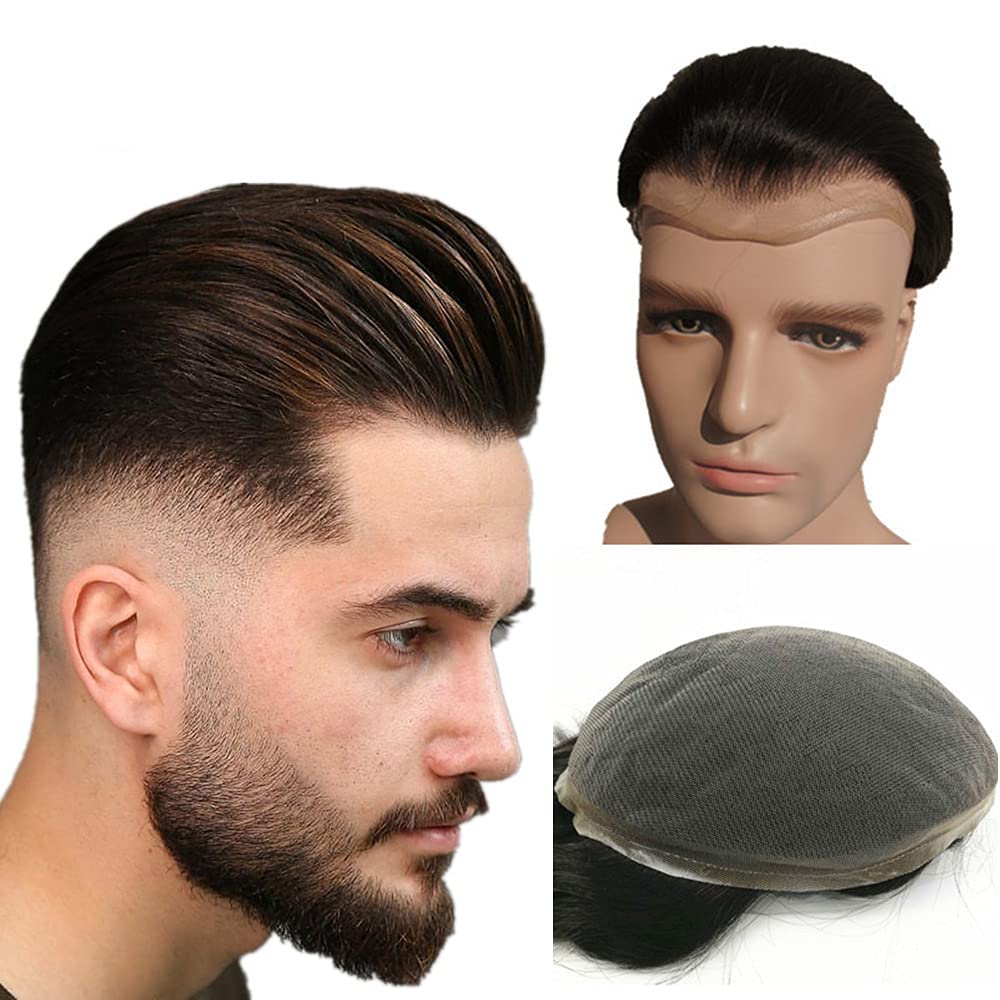
4. Combination Base Hair Systems
- Detailed Description: These systems strategically combine different materials to leverage their respective strengths. A common combination for vertex loss might feature:
- Lace Front: For the most natural transition at the front hairline (if the system extends that far or blends with existing hair).
- Monofilament Top/Vertex: For a breathable, natural scalp appearance and parting flexibility at the crown.
- PU Perimeter: Around the edges for easier application/removal of tape or glue and increased durability where the system experiences the most handling.
- Pros Expanded:
- Best of Multiple Worlds: Offers tailored benefits – realism where needed (front/top), durability and ease of use where practical (perimeter).
- Customizable: Can be designed to meet specific needs regarding breathability, realism, and attachment security.
- Balanced Performance: Often provides a good compromise between the pros and cons of single-material systems.
- Cons Expanded:
- Complexity: More complex construction can sometimes lead to slightly higher costs.
- Potential Transition Points: Care must be taken in manufacturing and fitting to ensure seamless transitions between materials.
- Best For: Individuals seeking a highly functional system that balances natural appearance, comfort, durability, and ease of maintenance. Often considered the optimal solution for many users.
- Vertex Specific Suitability: Allows for a breathable and realistic mono top at the vertex while having a durable, easy-to-adhere PU perimeter, offering a practical and comfortable solution.

5. Injected Hair Systems (Specifically Thin Skin Base)
- Detailed Description: While mentioned under PU systems, injected hair systems deserve specific focus due to their unique realism. Hair strands are meticulously injected into the thin skin base at an angle, mimicking the direction of natural hair growth without knots. This creates the illusion that hair is growing directly from the scalp. The base itself is typically ultra-thin or thin skin PU.
- Pros Expanded:
- Ultimate Scalp Realism: The knotless injection process is unmatched for simulating natural hair growth from the scalp.
- Natural Hair Direction: Hair lays naturally and can be styled easily in its intended direction.
- Undetectable Base: The thin skin adheres closely and disappears against the scalp.
- Cons Expanded:
- Lower Durability: The injection process and thin base make these systems more fragile than knotted or thicker base systems. Shorter lifespan is expected.
- Higher Cost: The meticulous injection process is labor-intensive, increasing the cost.
- Breathability Issues: Shares the same non-breathable characteristic as other PU bases.
- Best For: Users for whom the absolute most realistic scalp appearance is the top priority, particularly for areas like the vertex where the scalp is easily visible. Suitable for those prepared for more frequent replacements.
- Vertex Specific Suitability: The ultimate choice for replicating a natural vertex whorl and scalp appearance, provided the user can manage the shorter lifespan and potential heat.
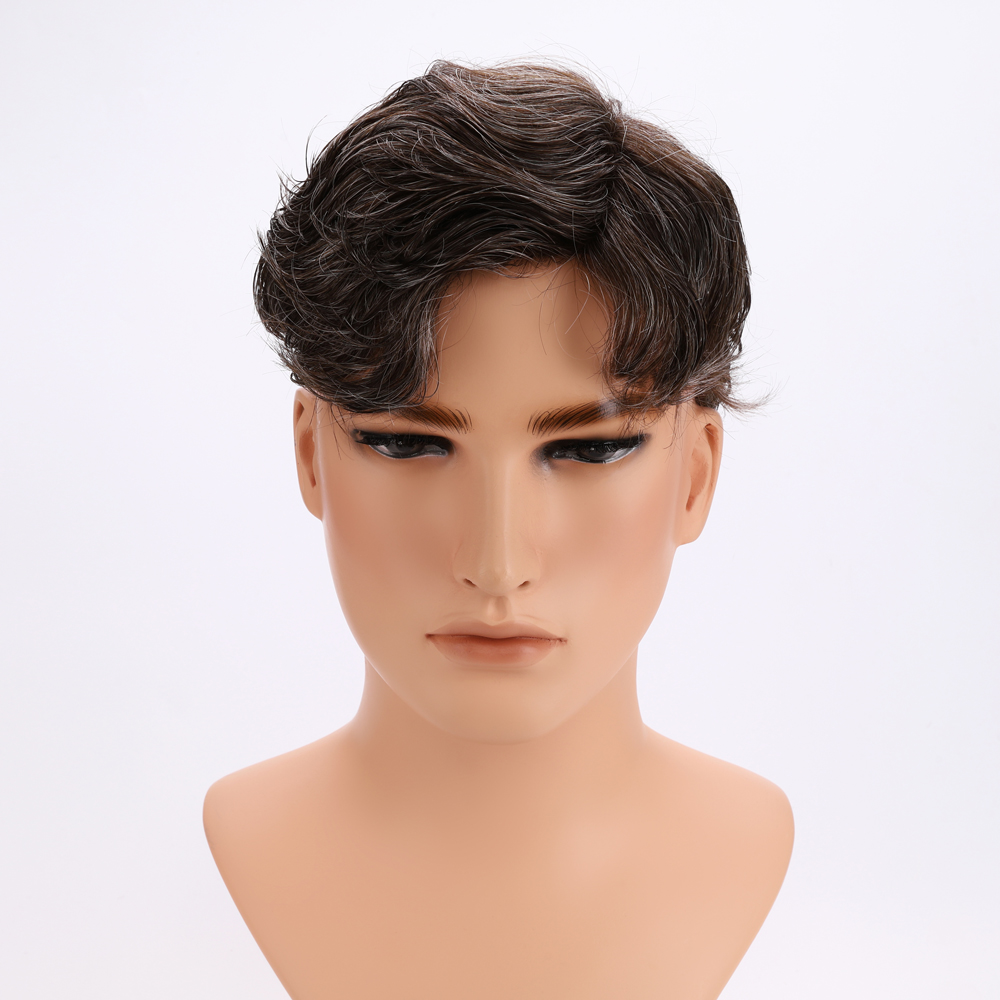
6. Welded Mono Hair Systems (Fine Welded Monofilament)
- Detailed Description: This is a variation of the monofilament base. Fine monofilament mesh is used, but the knots where the hair is tied are reinforced using a special welding technique (often involving heat or chemicals). This makes the knots stronger and less prone to shedding.
- Pros Expanded:
- Increased Durability: The primary benefit is enhanced longevity compared to standard hand-tied mono or lace, as hair shedding is reduced.
- Natural Scalp Appearance: Still offers the realistic scalp look of monofilament.
- Good Breathability: Retains the breathability advantages of monofilament mesh.
- Cons Expanded:
- Slightly Larger Knots: The welding process can sometimes make the knots slightly more perceptible than untreated knots, though usually still very small.
- Potential Stiffness: Can sometimes feel slightly less flexible than standard mono or lace.
- Best For: Individuals who like the look and feel of monofilament but desire enhanced durability and a longer lifespan from their system. Good for active lifestyles.
- Vertex Specific Suitability: Provides a durable yet realistic scalp appearance for the crown, resisting shedding potentially caused by friction or frequent washing.
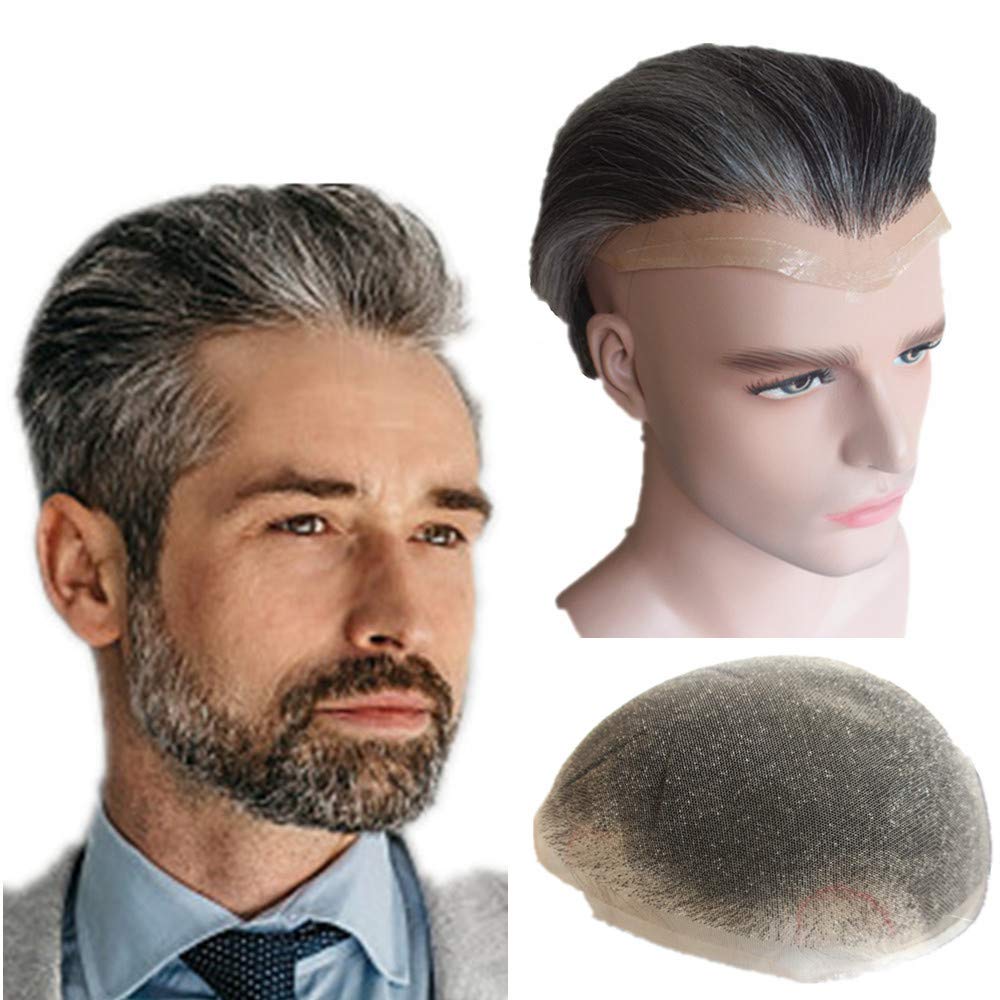
7. Clip-In Hair Toppers (Integration Pieces)
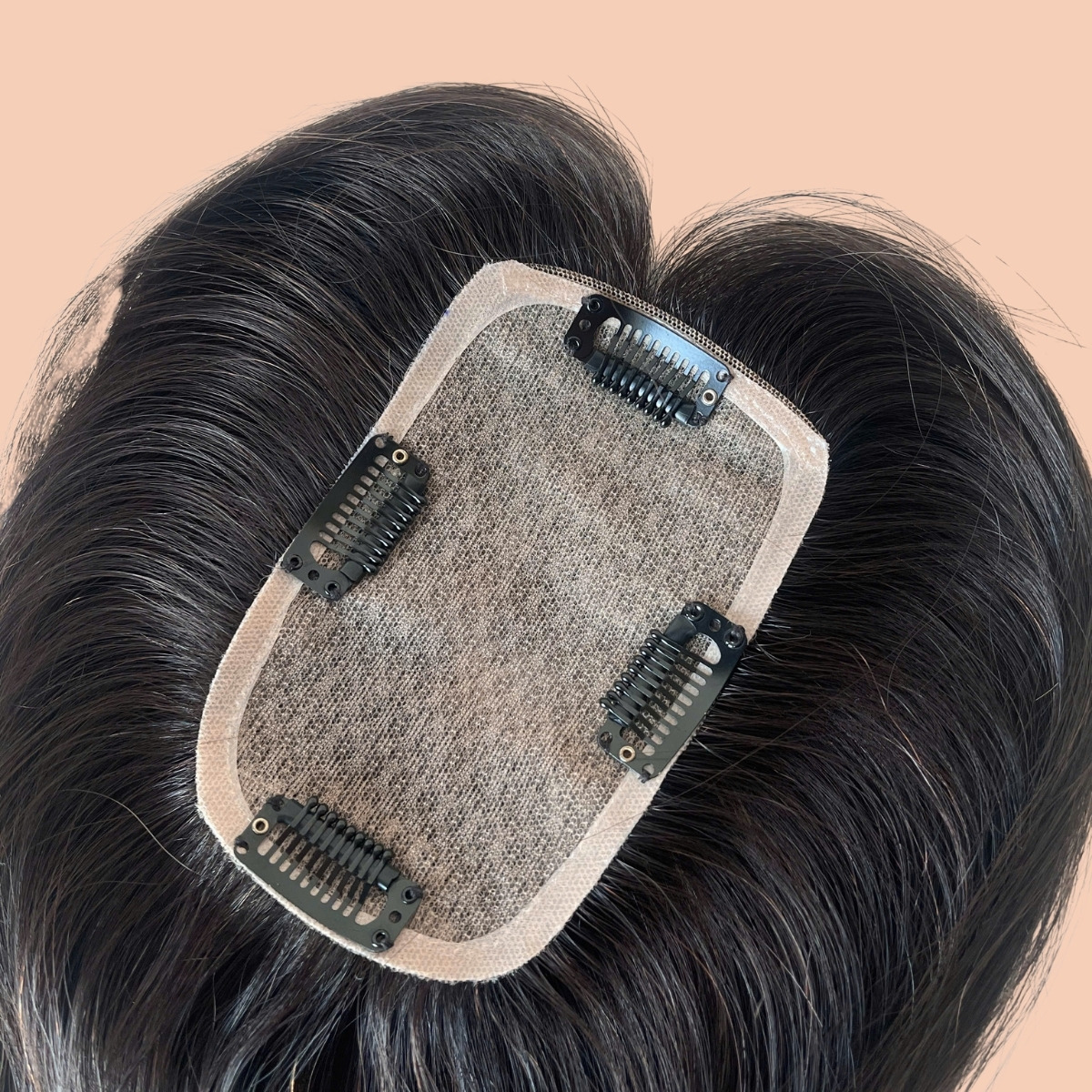
- Detailed Description: These are not full systems but smaller hairpieces designed specifically to add volume or coverage to targeted areas like the vertex. They consist of a base (can be mono, lace, silk, or PU) with hair attached, and several pressure-sensitive clips sewn around the perimeter. These clips attach directly to the wearer’s existing hair.
- Pros Expanded:
- Ease of Use: Extremely easy to apply and remove in seconds, requiring no adhesives or professional help for daily use.
- Non-Invasive: No shaving or bonding required, attaches to existing hair.
- Lower Cost: Generally much more affordable than full bonded systems.
- Temporary Solution: Ideal for occasional wear or for those not ready to commit to a semi-permanent system. Allows the scalp to breathe when not worn.
- Cons Expanded:
- Requires Sufficient Existing Hair: Needs enough surrounding hair of adequate strength to securely attach the clips. Not suitable for completely bald areas.
- Less Secure: Can potentially shift or feel less secure than bonded systems, especially during vigorous activity or strong wind.
- Potential for Traction Alopecia: If clips are placed in the same spot repeatedly or pull too tightly, they can potentially cause hair loss over time (though modern clips are designed to minimize this).
- Limited Coverage: Only covers the specific area under the base, may not be suitable for extensive loss.
- Best For: Individuals with mild to moderate thinning specifically at the vertex, who have enough surrounding hair for attachment. Great for those seeking a temporary, low-commitment, or budget-friendly option.
- Vertex Specific Suitability: Excellent for adding density and covering thinning directly at the crown whorl, blending into surrounding hair.
Choosing the Right Hair System: Key Considerations
Selecting the perfect hair system involves careful consideration of several factors:
- Hair Type: Consider your natural hair color, texture, and density. Choose a system that closely matches your existing hair for a seamless blend.
- Scalp Sensitivity: If you have a sensitive scalp, opt for a breathable base material like lace or monofilament.
- Lifestyle: Active individuals may prefer a more secure attachment method like gluing or taping.
- Maintenance: Consider the time and effort required for maintenance. Skin graft systems are generally easier to clean than lace systems.
- Budget: Hair systems range in price from a few hundred dollars to over a thousand. Set a budget before you start shopping.
- Desired Look: Think about the style you want to achieve. Do you want a natural hairline? Parting flexibility? Volume?
Hair System Materials: A Closer Look
Understanding the different materials used in hair systems is essential for making an informed choice:
- Human Hair: Offers the most natural look and feel. Can be styled with heat tools and dyed to match your natural hair color. Virgin human hair, which has not been chemically treated, is the highest quality and most expensive option.
- Synthetic Hair: More affordable than human hair but does not look or feel as natural. Cannot be styled with heat tools.
- Lace: A sheer, breathable material used for creating natural hairlines.
- Monofilament: A fine mesh material that mimics the appearance of natural scalp.
- Polyurethane (PU): A thin, skin-like material that provides a strong, secure attachment.
🎨 Your style, your hair — we make it exactly how you want.
Application and Maintenance of Vertex Hair Systems
Proper application and maintenance are crucial for extending the lifespan of your hair system and maintaining a natural appearance. As Phucthien, we highly suggest seeking the help of professionals.
Preparation: The Foundation for Success
- Clean Scalp: This is non-negotiable. Before applying any adhesive or tape, your scalp in the vertex area must be thoroughly cleaned.
- Process: Use an oil-removing cleanser or rubbing alcohol (99% preferably, if skin tolerates it) on a cotton pad to remove all traces of oil, sweat, and residue from previous applications.
- Why: Adhesives bond poorly to oily or dirty surfaces. A clean surface ensures maximum adhesion duration and prevents bacteria buildup under the system.
- Scalp Protection (Optional but Recommended):
- Product: Apply a thin layer of a scalp protector product (like Sure-Prep or similar).
- Function: Creates a barrier between your skin and the adhesive, reducing potential irritation and improving adhesion, especially in humid conditions or for oily skin types. Allow it to dry completely before applying adhesive.
- Marking Placement (Initially): When new to application, it can help to use a washable marker or eyeliner pencil to lightly mark the desired placement area on your scalp to ensure consistent positioning.

Application Methods: Securing Your System
- A. Liquid Adhesive (Bonding Glue): Offers the strongest, most seamless hold, often lasting 1-4 weeks.
- Types: Water-based (easier cleanup, less irritation) vs. Solvent-based (stronger hold, potentially more irritating). Choose based on skin sensitivity, climate, and desired hold time.
- Application to Scalp: Apply a thin, even layer(s) of adhesive to the designated scalp area using the applicator brush, a sponge, or even a fingertip (wear gloves). Crucially, allow each layer to become tacky or clear as per the manufacturer’s instructions (this “curing” time is vital for proper bonding). Rushing this step leads to a weak bond. Some adhesives require multiple layers.
- Application to Base (Optional): Some users apply a thin layer to the PU base perimeter as well, again allowing it to cure. Avoid getting adhesive on lace material directly if possible, apply to scalp only for lace.
- Placement: Carefully align the hair system’s front edge (if applicable) and gently roll or press it onto the adhesive-prepared scalp area, working from front to back or center outwards for vertex pieces. Avoid trapping air bubbles.
- Securing: Once placed, apply firm, even pressure across the entire base for 30-60 seconds to ensure a strong bond. A small roller tool can help. Avoid getting the system wet or excessive sweating for the first 24 hours to allow the bond to fully set.
- B. Hair System Tape: Double-sided adhesive tape, convenient and less messy than liquid glue. Hold varies from daily wear to 1-3 weeks.
- Types: Come in rolls or pre-cut contours (e.g., ‘A’ curve, ‘C’ curve). Different tack levels (low, medium, high) and formulations (e.g., for sensitive skin, waterproof). Common types include Red Liner (daily), Blue Liner (extended wear), SuperTape, Ultra Hold.
- Application to Base: Clean the underside of the system base (especially PU perimeters). Cut tape to desired lengths/shapes. Peel off one side of the backing and apply the tape firmly to the system base, ensuring no gaps, especially around the perimeter. Trim any excess tape.
- Placement: Peel off the remaining backing from the tape strips. Align the system carefully and press it firmly onto the prepared scalp area.
- Securing: Apply firm pressure over all taped areas to activate the bond.
- C. Clips (for Toppers): Used for temporary, non-adhesive attachment.
- Technique: Open the pressure-sensitive clips. Position the topper over the vertex thinning area. Slide the comb part of the clips into your existing hair near the base of the topper. Press down firmly on the clip edges until they snap shut, securing the topper to your hair. Ensure it feels secure but doesn’t pull uncomfortably. Distribute clips evenly for balanced hold.
Removal: Gentle Detachment
- Adhesive Release: Never forcefully pull the system off. This can damage the base and irritate your skin.
- Liquid Adhesive: Apply a generous amount of a specialized adhesive remover (citrus-based or alcohol-based solvent) around the edges of the system. Allow it several minutes to seep underneath and break down the bond. Gently lift an edge and apply more remover underneath as needed, slowly working your way around until the system releases easily.
- Tape: Spray or dab adhesive remover along the tape lines. Wait for the tape to soften and release its grip. Gently peel the system away from the scalp.
- Residue Clean-up (Crucial):
- Scalp: Use more adhesive remover on a cotton ball or cloth to gently rub away any remaining adhesive residue from your scalp. Follow up with a gentle cleanser and water.
- System Base: This is vital for the next application. Place the system on a surface you can clean (like a mirror or plastic wrap). Apply adhesive remover liberally to the base. Let it sit to soften the residue. Gently scrape (with a specialized tool or old credit card for PU) or rub (with a cloth for lace/mono) to remove the gunk. This may take time and patience. Clean the base thoroughly with solvent and then wash with soap/shampoo to remove all traces of remover.
Cleaning Your Hair System: Maintaining Hair Health
- Frequency: Typically wash every 1-2 weeks, or more often if you sweat heavily, use many styling products, or live in a dusty/polluted environment. Over-washing can dry out the hair.
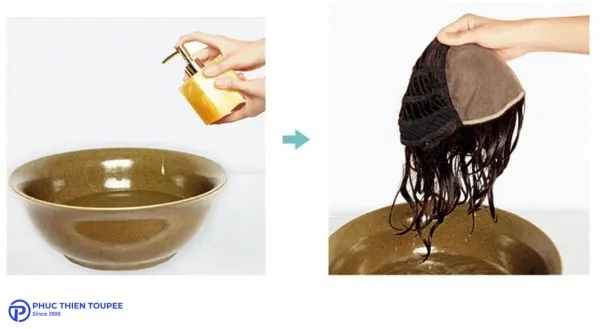
- Detangle First: Before getting the hair wet, gently detangle it using a wide-tooth comb or vent brush, starting from the ends and working up to the base. Wet hair tangles more easily.
- Use Lukewarm Water: Hot water can damage the hair and potentially weaken the base or knots. Cold water doesn’t clean as effectively.
- Use System-Specific Products: Regular shampoos/conditioners can be too harsh or contain ingredients that damage system hair or the base. Use sulfate-free, color-safe products designed for hair systems or processed human hair.
- Washing Technique:
- Wet the hair thoroughly under running lukewarm water, pointing the hair downwards in the direction it falls.
- Apply a small amount of shampoo to your hands, lather, and gently smooth it down the hair shaft. Do not rub, scrub, or massage vigorously, as this causes tangling. Gently work shampoo into the base if needed.
- Rinse thoroughly under running water until all shampoo is gone. Squeeze out excess water gently.
- Conditioning: Apply conditioner primarily to the mid-lengths and ends. Avoid applying conditioner directly to the base/knots, as it can loosen them over time, causing shedding. Leave on for a few minutes (as per product instructions), then rinse thoroughly. A leave-in conditioner spray can be beneficial after washing.
Drying Your Hair System
- Blot Gently: After rinsing, gently squeeze out excess water. Lay the system flat on a towel and blot gently – do not rub.
- Air Dry Preferred: The best method is to place the system on a wig stand or mannequin head and allow it to air dry completely. This is the gentlest method.
- Blow Drying (Use Caution): If you must blow dry, use the lowest heat setting and keep the dryer moving constantly, holding it at a distance. Avoid high heat, which can singe the hair or damage the base. Apply a heat protectant spray first.
Styling Your Hair System
- Tools: Use wide-tooth combs or brushes designed for hair systems.
- Heat Styling: Human hair systems can be heat styled (curled, straightened), but always use a heat protectant spray and keep temperatures moderate (ideally below 350°F or 175°C). Excessive heat shortens the hair’s lifespan. Synthetic systems generally cannot be heat styled (unless specified as heat-friendly).
- Products: Use styling products sparingly (mousses, gels, hairsprays) and choose alcohol-free options when possible. Product buildup requires more frequent washing.
- Be Gentle: Avoid excessive pulling or tension on the hair, especially near the base.
Storage
- Short-Term (Overnight): If removed daily (like toppers), store on a wig stand or mannequin head to maintain shape and prevent tangling.
- Long-Term: If storing for extended periods, ensure the system is clean and completely dry. Store in a box or bag (away from direct sunlight and dust) or on a covered stand.
Professional Maintenance
- Frequency: For bonded systems, plan for professional removal, deep cleaning, scalp care, minor repairs (like adding hair or fixing small tears), and reapplication every 2-6 weeks, depending on the system, adhesive, and your lifestyle.
- Benefits: Professionals have the tools, products, and expertise to deep clean residues, assess system condition, perform repairs, and ensure optimal reapplication for security and appearance. They can also help blend the system with any bio hair growth.
- Phucthien’s Emphasis: While home care is essential, regular professional servicing significantly extends the life and optimizes the appearance of your hair system. Don’t underestimate its value.
By following these detailed application and maintenance steps, you invest in the look, feel, and longevity of your vertex hair system, ensuring you get the maximum benefit and confidence from your chosen solution.
🔍 Looking for a specific size, base, or hair color? Order a fully personalized toupee now
Hair System Cost for Vertex Hair Loss in USA
The cost of a hair system for vertex hair loss in the USA can vary depending on several factors:
- Hair Quality: Human hair systems are generally more expensive than synthetic hair systems. Virgin human hair is the most expensive option.
- Base Material: Lace and monofilament bases tend to be more expensive than skin graft bases.
- Size: Larger hair systems that cover a larger area of the scalp will generally cost more.
- Customization: Custom-made hair systems that are tailored to your specific needs will be more expensive than stock hair systems.
- Salon vs. Online Purchase: Purchasing a hair system from a salon typically involves additional costs for consultation, fitting, and application services. Online purchases may be more affordable but require more self-direction.
Price Ranges
- Stock Hair Systems: $150 – $900
- Custom Hair Systems: $500 – $1500+
- Professional Application: $100 – $300 per application
Budget Considerations
- Initial Investment: Factor in the cost of the hair system itself, as well as any necessary supplies like adhesive, shampoo, and conditioner.
- Ongoing Maintenance: Budget for regular maintenance appointments, which can range from $50 to $150 per visit.
- Replacement Costs: Hair systems typically need to be replaced every few months to a year, depending on the quality and care.
Additional Tips for Choosing a Hair System
- Consult with a Professional: A hair system professional can assess your hair loss and recommend the best type of system for your needs.
- Read Reviews: Research different brands and products online to see what other customers have to say.
- Order Samples: If possible, order samples of different hair and base materials to see what you prefer.
- Be Patient: It may take some time to find the perfect hair system. Don’t be afraid to try different options until you find one that you love.
- Embrace the Change: Wearing a hair system is a positive step towards regaining your confidence and improving your appearance.
Your ideal system: Explore Hair Systems for Partial Hair Loss and the benefits of a Fitted Hair System
Conclusion: Reclaim Your Confidence with Vertex Hair System
Vertex hair loss can significantly impact your self-esteem and overall well-being. However, with the advancements in hair replacement technology, you have numerous options to effectively address this concern. Whether you opt for a lace front, monofilament, skin graft, or another type of hair system, the key is to choose a system that matches your hair type, lifestyle, and budget. With proper application, maintenance, and care, you can achieve a natural-looking and confident appearance.
As Phuc Thien Toupee, we are dedicated to empowering you on your hair restoration journey. Explore the possibilities, consult with professionals, and discover the perfect hair system to revitalize your look and reclaim your confidence.
Phuc Thien Toupee Co., Ltd
Design Brand: Royal Hair Vietnam
Office Address:
🏢 Room A909, Decapella Building, 116 Luong Dinh Cua Street, An Khanh Ward, Thu Duc City, Ho Chi Minh City 700000, Vietnam
Factory Address:
🏭 No. 26/9, Street 57, Thuong Hamlet, Tan Thong Hoi Ward, Cu Chi District, Ho Chi Minh City 700000, Vietnam
Email: ✉️ phucthientoupeevn@gmail.com
Phone / WhatsApp: 📞 +84 933 901 196
Websites: 🌐 phucthientoupee.com – 🌐 royalhair.shop



