

- 27/05/2025
- Posted by: phucthien
- Category: Blog
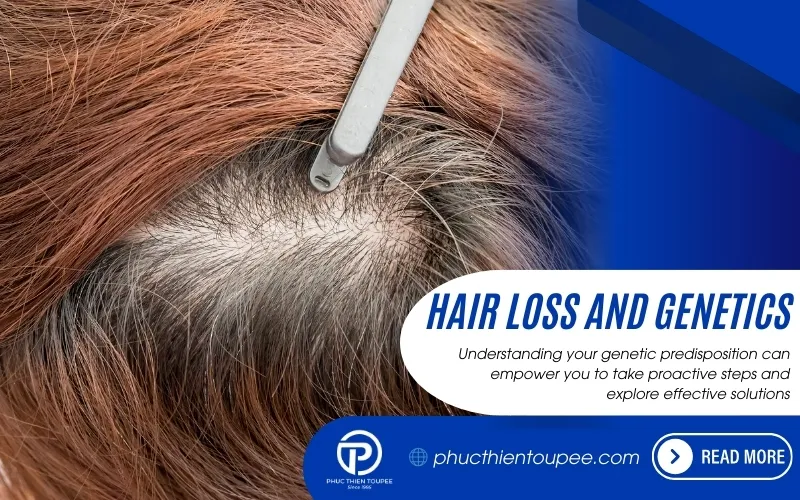
Hair Loss and Genetics plays a significant role in whether you experience thinning hair or baldness. Understanding your genetic predisposition can empower you to take proactive steps and explore effective solutions.
Let’s uncover the genetic factors influencing hair loss and discuss available genetic hair loss treatment options to help you maintain a healthy, full head of hair. Shedding light on hair thinning genes and heredity factors can help you make informed decisions about your hair care.
Understanding the Genetic Roots of Hair Loss
Hair loss, also known as alopecia, is a common concern affecting millions worldwide. While various factors can contribute to hair loss, genetics plays a crucial role. By understanding the genetic underpinnings of hair loss, individuals can gain valuable insights into their predisposition and explore potential interventions.
Genes That Cause Hair Loss
- Androgen Receptor (AR) Gene: Located on the X chromosome, the AR gene codes for the androgen receptor, which binds to dihydrotestosterone (DHT). Variations in this gene can influence the sensitivity of hair follicles to DHT, a hormone implicated in androgenetic alopecia (male and female pattern baldness). A study published in the Journal of Investigative Dermatology found that certain AR gene variants are associated with an increased risk of androgenetic alopecia.
- Wnt Signaling Pathway Genes: The Wnt signaling pathway plays a crucial role in hair follicle development and cycling. Genes involved in this pathway, such as WNT3, WNT10A, and DKK1, have been linked to hair loss conditions. Research published in Nature Genetics identified mutations in WNT10A as a cause of ectodermal dysplasia, which can manifest as hair loss.
- Other Genes: Several other genes have been implicated in hair loss, including those involved in immune function (HLA genes), hair follicle structure (FOXO3), and inflammation (IL1A). However, the exact role of these genes in hair loss is still being investigated.
🎨 Your style, your hair — we make it exactly how you want.
How Hair Loss Genes are Inherited
Hair loss genetics inheritance can be complex. Androgenetic alopecia, the most common type of hair loss, is typically inherited in a polygenic manner, meaning that multiple genes contribute to the condition. Both men and women can inherit these genes from either parent.
Here’s a simplified overview of inheritance patterns:
- Autosomal Dominant: Only one copy of the affected gene is needed to cause the trait (hair loss). If one parent has the gene, there’s a 50% chance their child will inherit it.
- Autosomal Recessive: Two copies of the affected gene are needed to cause the trait. Both parents must carry the gene for their child to be affected.
- X-Linked: The gene is located on the X chromosome. This means men (who have one X chromosome) are more likely to be affected than women (who have two X chromosomes).
It’s important to note that simply inheriting a gene associated with hair loss doesn’t guarantee that you’ll experience significant hair thinning. Environmental factors, lifestyle choices, and overall health can also play a role in the onset and severity of hair loss.
Unraveling the mystery: Debunk common Hair Loss Myths and understand your genetic predispositions

Understanding Hair Loss Patterns
Different types of hair loss exhibit distinct patterns. Understanding these patterns can help you identify the type of hair loss you’re experiencing and seek appropriate treatment.
Male Pattern Baldness (Androgenetic Alopecia)
Male pattern baldness typically begins with a receding hairline and thinning at the crown of the head. The Norwood scale is commonly used to classify the stages of male pattern baldness, ranging from minimal recession to extensive hair loss. This condition affects a significant percentage of men, with prevalence increasing with age. According to the American Hair Loss Association, approximately 85% of men experience noticeable hair thinning by age 50.
- Pattern: Receding hairline (M-shape), thinning at the crown.
- Cause: Genetic predisposition and hormonal factors (DHT).
- Progression: Gradual, often following the Norwood scale.
Female Pattern Baldness (Androgenetic Alopecia)
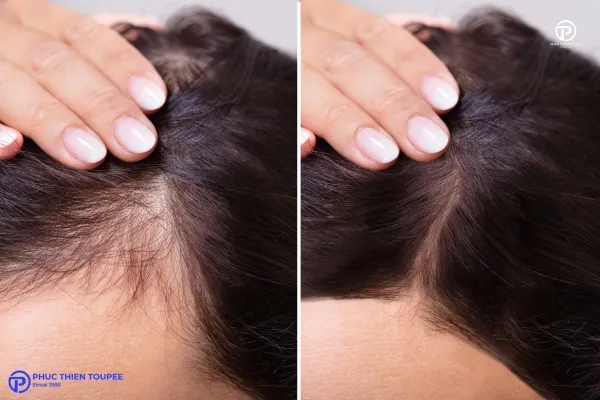
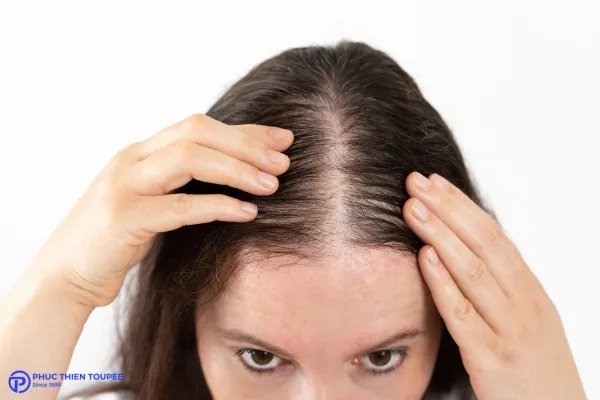
Female pattern baldness typically presents as a widening of the part and diffuse thinning across the scalp. The Ludwig scale is often used to classify the stages of female pattern baldness. Unlike men, women rarely experience complete baldness in specific areas.
- Pattern: Widening part, diffuse thinning.
- Cause: Genetic predisposition, hormonal changes (menopause).
- Progression: Gradual, often following the Ludwig scale.
Other Hair Loss Patterns
- Alopecia Areata: Characterized by patchy hair loss on the scalp or other parts of the body. It is an autoimmune condition in which the immune system attacks hair follicles.
- Telogen Effluvium: Characterized by excessive shedding of hair due to stress, illness, or medication. It is usually temporary, and hair growth resumes within a few months.
- Traction Alopecia: Caused by hairstyles that pull tightly on the hair follicles, such as braids, weaves, or tight ponytails. It can lead to permanent hair loss if not addressed.
Genetic Hair Loss Testing: Unveiling Your Predisposition
Genetic testing for hair loss can provide valuable information about your predisposition to certain types of hair loss, particularly androgenetic alopecia. While not a diagnostic tool, it can help you understand your risk and make informed decisions about preventative measures or treatment options.
How Hair Loss Genetics Testing Works
Genetic hair loss testing typically involves analyzing a DNA sample to identify specific gene variants associated with hair loss. The sample can be collected through a saliva swab or a blood sample. The DNA is then analyzed using various techniques, such as polymerase chain reaction (PCR) and DNA sequencing.
Here’s a simplified breakdown of the process:
- Sample Collection: A saliva swab or blood sample is collected.
- DNA Extraction: DNA is extracted from the sample.
- Gene Analysis: Specific gene variants related to hair loss (e.g., AR gene) are analyzed.
- Report Generation: A report is generated, outlining your genetic predisposition to hair loss.
Interpreting Your Hair Loss Genetics Test Results
Hair loss genetic test results typically provide information about your likelihood of developing androgenetic alopecia based on the presence of specific gene variants. The report may also provide insights into your potential response to certain treatments, such as minoxidil or finasteride.
It’s important to note that genetic testing is not a guarantee of whether or not you will experience hair loss. It provides an assessment of your risk based on your genetic makeup. Environmental factors, lifestyle choices, and overall health also play a role. Consulting with a healthcare professional or a hair loss specialist is crucial to interpreting your results and developing a personalized treatment plan.
Example Interpretation:
- High Risk: The presence of specific AR gene variants associated with increased DHT sensitivity may indicate a higher risk of developing androgenetic alopecia.
- Potential Treatment Response: The report may indicate whether you are likely to respond well to minoxidil or finasteride based on your genetic profile.
Phuc Thien Toupee recommends consulting with a qualified professional to understand your genetic testing results.
Accuracy and Limitations
While genetic hair loss testing can provide valuable insights, it’s important to understand its limitations. The accuracy of the test depends on the specific genes analyzed and the technology used. Not all genes involved in hair loss have been identified, and the interaction between genes and environmental factors is complex.
Limitations to consider:
- Incomplete Gene Coverage: The test may not analyze all genes involved in hair loss.
- Environmental Factors: Genetic testing cannot account for environmental factors that can contribute to hair loss.
- Predictive Value: The test provides an assessment of risk, not a guarantee of hair loss.
🔍 Looking for a specific size, base, or hair color? Order a fully personalized toupee now!
Hair Loss Genetics Treatment Options
While genetics play a significant role in hair loss, there are various treatment options available to manage and potentially reverse hair thinning. These treatments can address the underlying causes of hair loss and promote hair growth.
Medications
- Minoxidil (Rogaine): Minoxidil is an over-the-counter topical medication that stimulates hair growth by increasing blood flow to the hair follicles. It is effective for both male and female pattern baldness.
- How it works: Increases blood flow to hair follicles, prolonging the growth phase.
- Effectiveness: Can help slow hair loss and promote regrowth in some individuals.
- Usage: Apply to the scalp twice daily.
- Finasteride (Propecia): Finasteride is a prescription oral medication that blocks the production of DHT, a hormone implicated in androgenetic alopecia. It is primarily used for male pattern baldness.
- How it works: Blocks DHT production.
- Effectiveness: Can significantly slow hair loss and promote regrowth in many men.
- Usage: Take one tablet daily.
Important Note: Finasteride is not approved for use in women and can cause birth defects if taken during pregnancy.
Hair Transplants
Hair transplantation involves surgically removing hair follicles from a donor area (typically the back of the scalp) and transplanting them to areas of thinning or baldness. Two common techniques are follicular unit transplantation (FUT) and follicular unit extraction (FUE).
- FUT (Follicular Unit Transplantation): A strip of scalp is removed from the donor area, and the hair follicles are dissected and transplanted.
- FUE (Follicular Unit Extraction): Individual hair follicles are extracted from the donor area and transplanted.
Hair transplant procedures are highly effective for restoring hair density in balding areas. Success rates can be high, but results vary based on individual factors.
Low-Level Laser Therapy (LLLT)
LLLT involves using low-level lasers or light-emitting diodes (LEDs) to stimulate hair growth. It is believed that LLLT can increase blood flow to the hair follicles and promote cellular metabolism.
- How it works: Stimulates hair follicles with light energy.
- Effectiveness: Can help improve hair density and thickness in some individuals.
- Usage: Can be administered in-office or at home with LLLT devices.
Other Therapies
- Platelet-Rich Plasma (PRP) Therapy: PRP therapy involves injecting platelet-rich plasma into the scalp to stimulate hair growth. PRP contains growth factors that can promote tissue regeneration.
- Microneedling: Microneedling involves using a device with tiny needles to create micro-injuries on the scalp. This can stimulate collagen production and promote hair growth.
Lifestyle and Diet for Hair Health
While genetic predisposition plays a significant role, lifestyle and diet can also impact hair health. Adopting healthy habits can help promote hair growth and minimize hair loss.
Diet and Nutrition
- Protein: Hair is primarily made of protein (keratin), so adequate protein intake is essential for hair growth. Include lean meats, poultry, fish, eggs, and beans in your diet.
- Iron: Iron deficiency can lead to hair loss. Consume iron-rich foods such as spinach, lentils, and red meat.
- Vitamins: Vitamins A, C, D, and E, as well as B vitamins, are important for hair health. Eat a balanced diet rich in fruits and vegetables.
Stress Management
Chronic stress can contribute to hair loss. Practice stress-reducing techniques such as yoga, meditation, or deep breathing exercises.
✨ A toupee shouldn’t just hide hair loss — make it a style statement!
Hair Care Practices
- Avoid Harsh Treatments: Minimize the use of harsh chemicals, heat styling, and tight hairstyles that can damage hair follicles.
- Gentle Shampooing: Use a gentle shampoo and avoid overwashing your hair.
- Scalp Massage: Massaging the scalp can improve blood flow to the hair follicles.
Consulting Phuc Thien Toupee for Personalized Solutions
Understanding your genetic predisposition to hair loss is a valuable first step. At Phuc Thien Toupee, we offer comprehensive hair loss solutions tailored to your individual needs. Our team of experts can help you interpret your genetic test results, develop a personalized treatment plan, and explore options such as hair transplants, medications, and lifestyle modifications.
Here’s how Phuc Thien Toupee can help:
- Expert Consultation: Our experienced professionals can assess your hair loss condition and provide personalized recommendations.
- Genetic Test Interpretation: We can help you understand your genetic test results and their implications.
- Customized Treatment Plans: We develop tailored treatment plans based on your individual needs and goals.
- Advanced Hair Restoration Techniques: We offer a range of advanced hair restoration techniques, including hair transplants, LLLT, and PRP therapy.
- Premium Quality Toupees: We can offer premium quality toupees as a non-surgical solution if that is your preferred choice.
Contact Phuc Thien Toupee today for a consultation and take the first step towards regaining your confidence and achieving a fuller, healthier head of hair.
Beyond heredity: Explore how Hair Loss and Hormones and Hair Loss and Thyroid contribute to hair health
Conclusion: Hair Loss and Genetics
Hair Loss Genetics plays a critical role in determining your susceptibility to hair thinning and baldness. By understanding the genetic factors involved, you can take proactive steps to manage your hair health and explore various treatment options. Whether you choose medications, hair transplants, lifestyle modifications, or toupees, remember that there are solutions available to help you regain your confidence and achieve a fuller, healthier head of hair. Contact Phuc Thien Toupee today to discuss your options and develop a personalized plan.
Phuc Thien Toupee Co., Ltd
Design Brand: Royal Hair Vietnam
Office Address:
🏢 Room A909, Decapella Building, 116 Luong Dinh Cua Street, An Khanh Ward, Thu Duc City, Ho Chi Minh City 700000, Vietnam
Factory Address:
🏭 No. 26/9, Street 57, Thuong Hamlet, Tan Thong Hoi Ward, Cu Chi District, Ho Chi Minh City 700000, Vietnam
Email: ✉️ phucthientoupeevn@gmail.com
Phone / WhatsApp: 📞 +84 933 901 196
Websites: 🌐 phucthientoupee.com – 🌐 royalhair.shop



