

- 19/05/2025
- Posted by: phucthien
- Category: Blog

Toupee base materials are the foundation of any quality hairpiece, directly impacting its comfort, appearance, and longevity. Choosing the right base is essential for a natural look and confident wear. This guide by Phucthien will delve into the world of toupee base materials, examining the pros and cons of each, to help you select the perfect base for your lifestyle and preferences.
With a meticulously crafted hair system, we’ll explore how factors like breathability, durability, and realism contribute to your overall satisfaction. By understanding materials like lace, skin, monofilament, and combinations thereof, you’ll be empowered to make an informed decision that elevates your look.
Toupee Base Materials: A Comprehensive Guide
The base material of a toupee is the foundation upon which the hair is attached. It’s the part that sits directly against your scalp, so comfort and realism are paramount. Phucthien is dedicated to helping you find the perfect match. We believe that understanding the nuances of each material will ensure you achieve the desired look and feel.
Why Base Material Matters
The base material of your toupee significantly influences:
- Natural Appearance: The material’s ability to blend with your skin tone determines how realistic the hairpiece looks.
- Comfort: Breathability and weight impact comfort, especially for extended wear.
- Durability: Some materials are more resistant to wear and tear, affecting the lifespan of your toupee.
- Ease of Maintenance: Cleaning and styling depend on the base material’s properties.
- Styling Versatility: Certain bases allow for more flexible parting and styling options.
✂️ Be unique — create your custom-made toupee today!
Factors to Consider When Choosing a Base
Before diving into specific materials, consider these factors:
- Lifestyle: Active lifestyles may require more durable and secure bases.
- Climate: Breathability is crucial in hot and humid climates.
- Hair Density: Thicker hair may require a sturdier base for support.
- Attachment Method: Consider how the base will be attached (tape, glue, clips).
- Budget: Different materials come with varying price points.

Choose your comfort: Understand different Hairpiece Base Materials and compare Lace vs Poly Hair Systems
1. Lace Base: The Apex of Breathability and Natural Hairlines
Lace bases are widely celebrated in the hair system community, particularly for their remarkable ability to create an undetectable front hairline and offer superior comfort through breathability. At Phucthien, we often recommend lace for clients prioritizing a natural look and scalp comfort, especially in warmer climates.
Understanding Lace Construction:
Lace bases are crafted from a fine, sheer mesh material, typically polyester or nylon. Hair strands are individually hand-tied to this mesh. The key difference between types lies in the fineness of the mesh and the durability:
- French Lace: This is often considered the standard lace. It offers a good balance between being relatively undetectable and having reasonable durability. The mesh openings are small, providing a natural appearance, but the material itself is strong enough to withstand regular wear and tear for several months with proper care. Knots are typically small but may require bleaching for the most invisible effect, especially with darker hair shades.
- Swiss Lace: This lace is finer and softer than French lace. The mesh is thinner, with slightly larger openings, making it even less visible against the skin. This results in an exceptionally natural hairline. However, this increased delicacy means Swiss lace is more fragile and requires more careful handling during application, removal, and maintenance. Its lifespan is generally shorter than French lace.
- HD Lace (High Definition Lace): Representing the cutting edge in lace technology, HD lace is the thinnest and most transparent option available. It melts seamlessly into the scalp, rendering it virtually invisible from most angles and distances. It’s incredibly lightweight and offers excellent breathability. The trade-off is its extreme fragility; HD lace is the least durable option and demands expert handling and meticulous care. It’s often favoured for special occasions or by experienced wearers seeking the absolute pinnacle of realism.
The User Experience with Lace:
Wearing a lace base feels incredibly light and airy. The mesh construction allows air to circulate freely to the scalp, significantly reducing heat and moisture buildup. This makes it exceptionally comfortable for extended wear, particularly for individuals living in hot or humid environments or those prone to scalp perspiration. The flexibility of the lace allows it to conform reasonably well to the contours of the head.
Pros Elaborated:
- Unmatched Breathability: The open mesh structure is the core reason for its superior airflow, preventing scalp irritation and discomfort associated with trapped heat.
- Superior Natural Hairline: When hair is knotted (especially single-knotted and bleached) onto the fine mesh, it mimics the appearance of hair growing directly from the scalp follicles. This effect is most pronounced with Swiss and HD lace.
- Lightweight Comfort: The minimal weight of the lace material means wearers often report feeling like they aren’t wearing anything at all.
- Styling Freedom: Because the base is less detectable and hair is often knotted individually, you can part the hair virtually anywhere, offering great versatility in styling.
Cons Elaborated:
- Durability Concerns: The fine threads that make lace so undetectable are also its weakness. Lace can rip or fray if handled roughly, snagged, or subjected to harsh adhesives or solvents over time. Lifespan typically ranges from 2-6 months depending on the lace type and care.
- Maintenance Intensity: Gentle handling is non-negotiable. Cleaning requires careful soaking and rinsing rather than vigorous scrubbing. Adhesive removal must be done patiently using appropriate solvents to avoid damaging the delicate mesh. Knot bleaching, while enhancing realism, can slightly weaken the knots over time.
- Knot Visibility (Potential): While knots can be bleached or kept small (single knots), they can still be slightly perceptible up close, especially on darker hair if not expertly processed. This is less of an issue with lighter hair colours.
- Requires Skillful Application: Achieving the most natural look requires precise placement and secure bonding, often best performed by experienced users or professionals.

2. Skin Base (Polyurethane/PU): Seamless Integration and Ease of Use
Skin bases, technically made from polyurethane (PU), are designed to mimic the appearance and feel of the scalp. They are thin, flexible membranes onto which hair is injected or knotted. Phucthien finds these bases popular among clients who value ease of application, cleaning, and a very realistic scalp appearance, particularly when hair is parted.
Understanding Skin Base Construction:
These bases are essentially thin sheets of polymer. The primary variable is thickness, measured in millimeters, which directly impacts realism versus durability:
- Ultra-Thin Skin (approx. 0.02mm – 0.04mm): This is the thinnest, most realistic option. Hair is often V-looped or injected into the base without knots, creating an incredibly natural scalp appearance where the hair seems to emerge directly. The edge is super fine and melts into the skin. However, it’s extremely delicate and has the shortest lifespan, often just 1-2 months.
- Thin Skin (approx. 0.06mm – 0.08mm): Offers a good compromise. It’s still very realistic, often using knotless ventilation methods like V-looping or injection near the front, perhaps with tiny knots elsewhere. It’s more durable than ultra-thin skin, typically lasting 2-4 months.
- Medium Skin (approx. 0.10mm – 0.14mm): Provides significantly more durability while still maintaining a reasonably natural appearance, though the base edge might be slightly more detectable than thinner options. Hair is usually knotted. Lifespan can extend to 4-6 months or more.
- Thick Skin (approx. 0.16mm+): This is the most robust skin base option, designed for maximum longevity. It’s less common for full systems due to reduced realism and comfort but might be used in specific areas or for specialized toupees.
The User Experience with Skin Bases:
Skin bases feel smooth against the scalp and conform very closely to its shape, providing a secure feel. Because they are non-porous, they act like a second skin. This makes cleanup incredibly easy – adhesive residue wipes off the smooth surface readily. However, this non-porous nature is also their main drawback: lack of breathability. Heat and sweat can get trapped underneath, potentially leading to discomfort in warm conditions or during physical activity. Some skin bases can also have a slight sheen, although modern finishes often minimize this.
🎨 Your style, your hair — we make it exactly how you want.
Pros Elaborated:
- Highly Realistic Scalp Appearance: Especially with thinner bases and knotless ventilation (injection/V-looping), the base perfectly mimics skin, making partings look incredibly natural.
- Effortless Cleaning: The non-porous PU surface doesn’t absorb liquids or adhesives, making cleanup quick and straightforward with appropriate solvents.
- Simple Attachment: The smooth surface provides an excellent bonding area for both liquid adhesives and tapes, allowing for easy and secure attachment.
- Good Durability (Medium/Thick): Thicker PU bases can withstand significant wear and tear, offering a longer lifespan than lace or ultra-thin skin.
- Creates a Defined Edge: The defined edge can make placement easier for some users.
Cons Elaborated:
- Limited Breathability: This is the most significant drawback. The solid membrane prevents airflow, leading to potential heat buildup, sweating, and discomfort for some wearers, especially those with sensitive skin or in warm climates.
- Potential for Unnatural Hairline (Thicker Bases): While the scalp look is great, the edge of thicker skin bases can be more noticeable at the hairline compared to lace.
- Fragility (Ultra-Thin/Thin Bases): The trade-off for extreme realism is fragility. Thin skin can tear easily during handling or removal if not done carefully.
- Potential Shine: Some PU materials can reflect light unnaturally, though matte finishes and specific products can mitigate this.
- Hair Ventilation Limitations: While injection and V-looping look great, they can sometimes be less durable than knotted hair, potentially leading to faster shedding on ultra-thin bases.
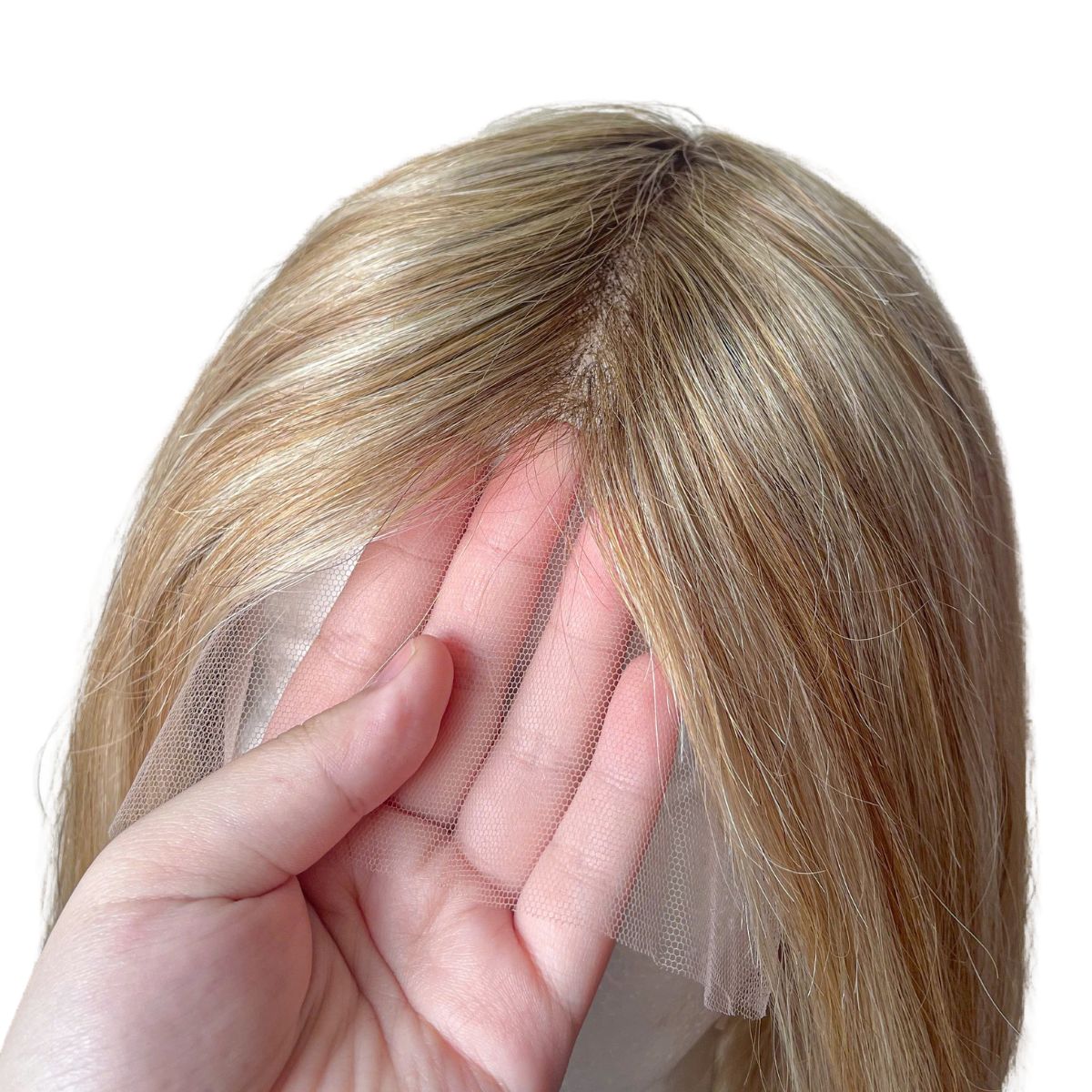
3. Monofilament Base: The Durable Workhorse
Monofilament (often called “mono”) bases are known for their exceptional durability and ability to support higher hair densities. They consist of a fine, woven mesh, typically made of nylon or polyester, which is stronger and stiffer than lace. Phucthien values monofilament for its longevity and resilience, often incorporating it into systems designed for long-term wear.
Understanding Monofilament Construction:
The monofilament material resembles a very fine netting but is significantly stronger and less pliable than lace. Hair strands are individually hand-tied onto this mesh.
- Fine Monofilament: Uses thinner threads and a slightly more open weave. This offers better scalp visibility (appearing more natural) and slightly more flexibility than standard mono, while still being very durable.
- Welded Monofilament: The intersections of the mesh threads are fused (welded) together, creating an exceptionally strong and rigid material that resists stretching and tearing. It’s less common for full bases due to stiffness but excellent for reinforcing specific areas.
- Double Monofilament: Features two layers of monofilament mesh. The knots are tied to the bottom layer, and the top layer provides a smoother surface against the scalp, better concealing the knots for added comfort and realism.
Hair is typically knotted onto monofilament. Because the material is stronger, it can comfortably support double knots, which are more secure but slightly larger, or single knots for a finer appearance.
The User Experience with Monofilament:
Monofilament feels slightly stiffer than lace initially, though it softens somewhat with wear. It offers moderate breathability – better than skin bases, as the mesh allows some airflow, but not as airy as lace. Its key characteristic is its robustness; it feels substantial and less prone to accidental damage. Parting the hair on a monofilament base looks quite natural because the individual knots allow hair to swivel freely, mimicking natural growth patterns.
Pros Elaborated:
- Outstanding Durability: This is mono’s primary advantage. The strong mesh resists tearing and stretching, leading to a longer lifespan compared to lace or thin skin bases, often lasting 6-12 months or longer with good care.
- Natural Hair Movement & Parting: Hair knotted onto mono can be parted and styled freely, offering a natural look and excellent styling versatility, especially across the top of the head.
- Good Scalp Appearance (Especially Fine/Double Mono): While perhaps not quite as invisible as lace or thin skin, fine or double monofilament allows the scalp colour to show through reasonably well, creating a natural appearance.
- Supports Higher Densities: The strength of the mesh makes it ideal for supporting medium to heavy hair densities without strain.
- Moderate Breathability: Offers a comfortable middle-ground, providing some airflow unlike skin bases.
Cons Elaborated:
- Slightly Less Natural Hairline Edge: The edge of a monofilament base can be more noticeable than lace or ultra-thin skin if used right at the front hairline without a transition material (like a lace front).
- Potential for Stiffness: Especially with standard or welded mono, the base can feel less pliable and might not conform as intimately to the scalp contours as lace or thin skin.
- Knot Visibility: Knots tied to monofilament can be slightly more visible than perfectly bleached knots on lace or injected hair on skin, though techniques like using lighter knots or double mono layers mitigate this.
- Higher Cost than Skin: Generally, monofilament material and the labour involved make these bases slightly more expensive than basic skin systems.

4. Combination Base: Tailored Solutions for Optimal Performance
Combination bases, as the name suggests, strategically integrate two or more different base materials into a single hair system. The goal is to leverage the specific advantages of each material in different areas of the toupee, creating a customized solution that balances realism, durability, comfort, and ease of use. Phucthien frequently designs combination systems as they often provide the most well-rounded performance for diverse client needs.
Understanding Combination Base Construction:
There’s no single formula; combinations are designed based on desired outcomes. Common examples include:
- Lace Front with Mono Top and PU Perimeter: This popular design uses delicate lace at the very front for an undetectable hairline, durable monofilament across the larger top section for longevity and natural parting, and a polyurethane (skin) perimeter around the sides and back for easy tape/glue application and a secure edge.
- Skin Base with Lace Front: Combines the easy cleaning and scalp appearance of a skin base (often thin skin) across the majority of the unit, with a lace front section to achieve that critical natural hairline transition.
- Mono Top with Lace Front and Back: Focuses on durability across the top (mono) with natural hairlines at both the front and nape (lace).
- Full Lace with PU Perimeter: Offers maximum breathability and realism across the entire unit (lace) but adds a thin PU strip around the edge for easier and more secure bonding with adhesives.
The construction involves carefully stitching or bonding these different material sections together seamlessly.
The User Experience with Combination Bases:
The feel and performance depend entirely on the specific combination of materials used. Ideally, the wearer experiences the primary benefits of each material where it matters most – the invisible hairline from the lace, the robustness and easy parting of the mono top, the secure adhesion of the PU perimeter. The goal is to minimize the drawbacks of any single material by compensating with another. Breathability will vary depending on how much lace or mono is incorporated versus less breathable skin sections.
🔍 Looking for a specific size, base, or hair color? Order a fully personalized toupee now!
Pros Elaborated:
- Optimized Performance: Allows for tailoring the base to prioritize specific features (e.g., hairline realism and durability and easy application) in one unit.
- Balanced Characteristics: Can achieve a better overall balance of breathability, natural appearance, durability, and ease of use than most single-material bases.
- Leverages Strengths: Places the best material for the job in each specific zone (e.g., lace where it’s most visible, PU where adhesion is key).
- Highly Customizable: Allows for precise solutions based on individual scalp shape, lifestyle, and preferences.
Cons Elaborated:
- Increased Complexity & Cost: Manufacturing combination bases requires more intricate work and multiple materials, generally leading to a higher price point.
- Potential Transition Points: The seams where different materials meet need to be expertly crafted to be flat and undetectable. If done poorly, they could potentially cause irritation or be visible.
- Varied Maintenance Needs: Different sections of the base may require slightly different cleaning or adhesive removal techniques, demanding more attention to detail from the wearer.
- Repair Complexity: If one section gets damaged, repairing a combination base can be more complex than repairing a single-material base.

5. Silk Base (Silk Top / Hidden Knots): The Zenith of Scalp Realism
Silk bases, often referred to as “Silk Tops” when used as an inset or “Injected Lace” (though technically different from injected skin), represent the premium tier for achieving an utterly natural scalp appearance. They are designed to completely hide the knots where the hair is attached, creating the perfect illusion of hair growing directly from the scalp. Phucthien considers silk bases the ultimate choice for clients prioritizing undetectable partings and scalp realism above all else.
Understanding Silk Base Construction:
The magic of a silk base lies in its layered construction, typically involving three layers:
- Base Layer (Lace or Mono): A foundational layer of lace or monofilament provides structure. The hair is knotted onto this layer.
- Silk Layer: A layer of fine, opaque silk material (often Chinese or Korean silk) is placed on top of the base layer.
- Top Layer (Optional Diamond Lace): Sometimes a very fine third layer of lace is placed on the very top for added smoothness or specific effects.
The hair strands, knotted to the bottom layer, are then individually pulled through the silk layer. This means the knots remain hidden below the visible silk surface. When you look down onto the parting area of a silk base, you see only the silk material (which resembles scalp) and the hair strands emerging from it – no knots are visible.
The User Experience with Silk Bases:
Wearing a silk base feels very smooth and comfortable against the scalp due to the soft silk layer. The visual effect when parting the hair is incredibly realistic – it genuinely looks like your own scalp. However, the layered construction makes silk bases slightly thicker and potentially less breathable than a single layer of lace. They might also feel slightly warmer than lace bases. Because of the complexity and materials, they are also heavier than lace or ultra-thin skin systems.
Pros Elaborated:
- Flawless Scalp Illusion: The complete concealment of knots provides the most natural-looking scalp possible in a hair system. Partings are virtually indistinguishable from a real scalp.
- No Need for Knot Bleaching: Since the knots are hidden, the often-damaging process of bleaching knots is unnecessary, which can contribute to the longevity of the hair itself.
- Comfortable Feel: The smooth silk layer is generally very comfortable against the skin.
Cons Elaborated:
- Highest Cost: The complex, multi-layered construction and labour-intensive process make silk bases the most expensive option available.
- Reduced Breathability: Compared to lace, the multiple layers (especially the silk) reduce airflow, potentially making it feel warmer.
- Increased Thickness and Bulk: The layered structure inevitably adds some thickness and weight compared to single-layer bases like lace or thin skin.
- Durability Concerns: While the base structure might be durable (if using mono), the silk layer itself can be delicate. It can also be prone to staining or discolouration over time. Moisture can potentially get trapped between layers if not dried thoroughly.
- Longer Production Time: Manufacturing silk base systems is intricate and takes significantly longer than other base types.
- Potentially Noticeable Edge: Like mono, the edge of a full silk base might be more detectable at the hairline than lace, which is why silk is often used as an inset (Silk Top) combined with a lace front.

Making the Right Choice
Choosing the right toupee base material depends on your individual needs and preferences. Consider the factors discussed above, and don’t hesitate to consult with a Phucthien specialist for personalized recommendations.
Summary Table
| Material | Durability | Breathability | Natural Appearance | Ease of Attachment | Maintenance | Cost |
| Lace | Low | High | Very High | Difficult | High | Moderate |
| Skin | Medium | Low | High | Easy | Easy | Moderate |
| Monofilament | High | Medium | Medium | Medium | Medium | High |
| Combination | Varies | Varies | Varies | Varies | Varies | High |
| Silk | Low | High | Exceptional | Difficult | Very High | Very High |
✨ A toupee shouldn’t just hide hair loss — make it a style statement!
Expert Recommendations from Phucthien
At Phucthien, we understand that selecting the right toupee base material can feel overwhelming. Here are some expert recommendations to guide you:
- For Active Lifestyles: Choose a monofilament or combination base with a durable perimeter.
- For Hot Climates: Opt for a lace base for maximum breathability.
- For a Natural Hairline: A lace front or silk base is ideal.
- For Easy Maintenance: A skin base is the simplest to clean and maintain.
- For Maximum Realism: A silk base offers the most undetectable appearance.
Custom fit: Explore Custom Base Design Options and how Toupee Cleaning by Base Material impacts longevity
Conclusion: Your Perfect Base Awaits
Choosing the right toupee base material is a personal decision. By understanding the pros and cons of each option, you can find the perfect base to enhance your confidence and appearance. Phucthien is here to guide you every step of the way. We hope this guide has been helpful in your search for the perfect hair system. With a bit of knowledge and expert guidance, you’ll find the ideal solution for a confident, natural look.
Phuc Thien Toupee Co., Ltd
Design Brand: Royal Hair Vietnam
Office Address:
🏢 Room A909, Decapella Building, 116 Luong Dinh Cua Street, An Khanh Ward, Thu Duc City, Ho Chi Minh City 700000, Vietnam
Factory Address:
🏭 No. 26/9, Street 57, Thuong Hamlet, Tan Thong Hoi Ward, Cu Chi District, Ho Chi Minh City 700000, Vietnam
Email: ✉️ phucthientoupeevn@gmail.com
Phone / WhatsApp: 📞 +84 933 901 196
Websites: 🌐 phucthientoupee.com – 🌐 royalhair.shop



