

- 11/06/2025
- Posted by: phucthien
- Category: Blog
Styling hairpieces by texture can unlock a world of confidence and versatility, allowing you to achieve any desired look. This comprehensive guide provides expert tips and techniques to beautifully style hairpieces for various hair textures, ensuring a natural and flawless appearance every time. Explore the art of hair enhancement with specialized advice. Discover the best practices for hair systems, hair extensions, and even specific solutions like cranial prosthesis.
Ready to transform your look with the perfect hairpiece? This guide empowers you with easy-to-follow instructions and professional advice to enhance your style and confidence. Let’s dive into the world of wigs, toupees, and toppers.
Understanding Different Hair Textures for Hairpiece Styling
Before diving into styling techniques, it’s crucial to understand the nuances of different hair textures. Each texture requires a specific approach to achieve optimal results.
- Fine Hair: Characterized by its delicate nature and tendency to lack volume. Styling fine hairpieces requires gentle techniques and lightweight products.
- Medium Hair: Offers a balance between fine and thick, providing versatility in styling. Medium hairpieces can handle various styling techniques and products.
- Thick Hair: Known for its density and volume, thick hair can be more challenging to style. Thick hairpieces require more robust styling techniques and products.
- Straight Hair: Sleek and smooth, straight hairpieces need styling techniques that add volume and texture without causing damage.
- Wavy Hair: Offers a natural, textured look that’s easy to enhance. Wavy hairpieces can be styled to create both casual and formal looks.
- Curly Hair: Requires specialized care to maintain its shape and prevent frizz. Styling curly hairpieces involves defining curls and adding moisture.
- Coily Hair: The most fragile hair type.

Unlock your style: Master Hairpiece Cutting and Styling for any Hairpiece Styles
4 Essential Hairpiece Styling Tips for Different Textures
Here are four essential styling tips tailored to different hair textures, ensuring your hairpiece always looks its best. Phuc Thien Toupee has perfected these techniques over years of experience.
Tip 1: Fine Hairpiece Styling – Volume is Key
Fine hairpieces require a delicate touch to avoid causing damage or flattening the hair. The goal is to add volume and create the illusion of thicker hair.
- Technique:
- Start with Lightweight Products: Use volumizing shampoos and conditioners specifically designed for fine hair. Avoid heavy products that can weigh the hair down.
- Apply Volumizing Mousse: Before blow-drying, apply a lightweight volumizing mousse from the roots to the ends. This will add body and lift.
- Blow-Dry Upside Down: Flip your head upside down while blow-drying to maximize volume at the roots. Use a round brush to lift the hair as you dry.
- Teasing: Gently tease the hair at the crown using a fine-tooth comb to create additional volume. Be careful not to over-tease, as this can cause damage.
- Use Texturizing Spray: Finish with a light spritz of texturizing spray to add grip and hold without weighing the hair down.
- Products to Use:
- Volumizing shampoo and conditioner (e.g., Living Proof Full Shampoo and Conditioner)
- Lightweight volumizing mousse (e.g., Bumble and Bumble Thickening Full Form Mousse)
- Texturizing spray (e.g., Oribe Dry Texturizing Spray)
- Fine-tooth comb for teasing
- Expected Result: Increased volume and a fuller-looking hairpiece that appears natural and healthy.

Tip 2: Thick Hairpiece Styling – Taming the Mane
Thick hairpieces offer plenty of volume but can be challenging to manage. The key is to control the thickness and create a manageable style.
- Technique:
- Start with Hydrating Products: Use hydrating shampoos and conditioners to add moisture and prevent frizz.
- Apply Smoothing Serum: After washing, apply a smoothing serum or oil to tame frizz and add shine.
- Section the Hair: Divide the hair into manageable sections before styling. This will make it easier to control and prevent tangling.
- Use Heat Protectant: Before using any heat styling tools, apply a heat protectant spray to prevent damage.
- Straighten or Curl in Sections: Straighten or curl the hair in small sections, using a high-quality flat iron or curling iron.
- Use a Strong-Hold Hairspray: Finish with a strong-hold hairspray to keep the style in place.
- Products to Use:
- Hydrating shampoo and conditioner (e.g., Moroccanoil Hydrating Shampoo and Conditioner)
- Smoothing serum (e.g., John Frieda Frizz Ease Serum)
- Heat protectant spray (e.g., Tresemmé Thermal Creations Heat Tamer Spray)
- Strong-hold hairspray (e.g., L’Oréal Elnett Satin Hairspray)
- Expected Result: A sleek, manageable style with reduced frizz and enhanced shine.
✨ A toupee shouldn’t just hide hair loss — make it a style statement!
Tip 3: Curly Hairpiece Styling – Defining and Hydrating
Curly hairpieces require extra moisture and gentle handling to maintain their shape and prevent frizz. The goal is to define the curls and keep them hydrated. Phuc Thien understands curly hair textures inside and out.
- Technique:
- Use Sulfate-Free Products: Use sulfate-free shampoos and conditioners to avoid stripping the hair of its natural oils.
- Apply Leave-In Conditioner: After washing, apply a generous amount of leave-in conditioner to hydrate the curls.
- Define Curls with Curl Cream: Apply a curl-defining cream or gel to enhance the natural curl pattern.
- Scrunch the Hair: Scrunch the hair upwards to encourage curl formation.
- Air Dry or Diffuse: Allow the hair to air dry or use a diffuser attachment on your blow dryer to gently dry the curls without causing frizz.
- Use a Wide-Tooth Comb: Detangle the hair with a wide-tooth comb to avoid breaking the curls.
- Products to Use:
- Sulfate-free shampoo and conditioner (e.g., Shea Moisture Coconut & Hibiscus Curl & Shine Shampoo and Conditioner)
- Leave-in conditioner (e.g., Cantu Shea Butter Leave-In Conditioning Repair Cream)
- Curl-defining cream (e.g., DevaCurl Defining Gel)
- Wide-tooth comb
- Expected Result: Well-defined, hydrated curls with minimal frizz and enhanced shine.
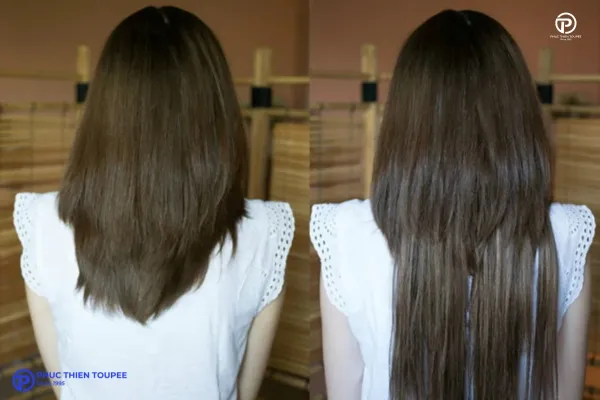
Tip 4: Straight Hairpiece Styling – Adding Texture and Movement
Straight hairpieces can sometimes look flat and lifeless. The key is to add texture and movement to create a more dynamic style.
- Technique:
- Use Texturizing Products: Apply texturizing spray or mousse to add grip and volume.
- Create Waves with a Curling Iron: Use a curling iron or wand to create loose waves or curls.
- Tease the Roots: Gently tease the roots to add volume at the crown.
- Use Dry Shampoo: Apply dry shampoo to the roots to absorb excess oil and add texture.
- Flip Your Hair: Flip your head upside down and shake out the hair to create a tousled, natural look.
- Finish with Hairspray: Finish with a light-hold hairspray to keep the style in place.
- Products to Use:
- Texturizing spray (e.g., Oribe Dry Texturizing Spray)
- Curling iron or wand
- Dry shampoo (e.g., Batiste Dry Shampoo)
- Light-hold hairspray (e.g., Living Proof Flex Hairspray)
- Expected Result: A textured, voluminous style with natural movement and added dimension.
🔍 Looking for a specific size, base, or hair color? Order a fully personalized toupee now!
Maintaining Your Hairpiece for Long-Lasting Beauty
Proper maintenance is essential for extending the life and beauty of your hairpiece. Here are some key maintenance tips:
Washing Your Hairpiece: The Foundation of Care
Washing removes product buildup, sweat, and environmental pollutants that can degrade the hair fibers and affect the appearance.
- Frequency: This depends on usage. If worn daily, washing every 7-14 wears is a general guideline. However, adjust based on your environment, activity level, and product use. Human hair pieces may require more frequent washing than synthetics if they absorb oils more readily.
- Water Temperature: Always use cool or lukewarm water. Hot water can damage synthetic fibers, strip moisture from human hair, and potentially affect the cap construction.
- Preparation: Before wetting the hairpiece, gently detangle it using a wide-tooth comb or your fingers. Start from the ends and work your way up towards the base to minimize stress on the fibers.
- Products: Use shampoos specifically formulated for hairpieces (human or synthetic as appropriate). These are typically sulfate-free and gentler than regular shampoos. Phuc Thien recommends products with moisturizing ingredients like glycerin or natural oils for human hair pieces.
- Washing Process:
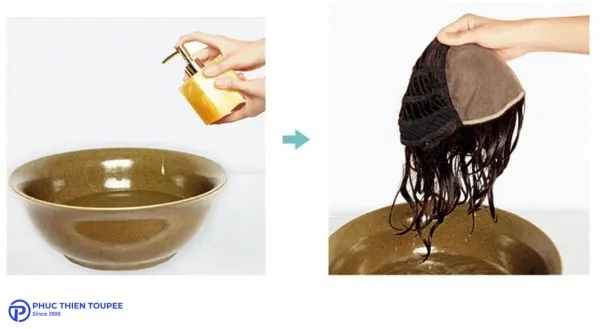
- Fill a basin with cool water and add a small amount of the appropriate shampoo, mixing it gently.
- Submerge the hairpiece fully and let it soak for 5-10 minutes. Avoid vigorous rubbing or scrubbing, which can cause tangling and frizz.
- Gently swish the hairpiece in the water. For stubborn spots, you can gently work the shampoo through with your fingers.
- Drain the soapy water and refill the basin with clean, cool water.
- Rinse the hairpiece thoroughly by swishing it until all shampoo residue is gone. Repeat rinsing if necessary.
Conditioning: Restoring Moisture and Manageability
Conditioning is vital, especially for human hair pieces which don’t receive natural oils from the scalp. It restores moisture, enhances softness, and makes detangling easier.
- Products: Use conditioners designed for hairpieces. For human hair, a deep conditioner or hair mask can be used periodically (e.g., monthly) for extra hydration. Synthetic conditioners often come in spray form and help reduce static.
- Application (Rinse-Out for Human Hair):
- After rinsing out the shampoo, gently squeeze out excess water (do not wring).
- Apply conditioner, focusing on the mid-lengths and ends. Avoid applying conditioner directly to the base or knots (especially on hand-tied pieces), as this can loosen them over time.
- Leave the conditioner on for the time specified on the product label (usually 2-5 minutes).
- Rinse thoroughly with cool water until the water runs clear.
- Application (Leave-In for Synthetic/Human Hair): Lightweight leave-in conditioners (often sprays) can be used on damp hair after washing or between washes to add moisture and reduce static, especially for synthetic fibers.
Drying Techniques: Preventing Damage
Improper drying can cause significant damage. Patience is key.
- Towel Drying: Gently blot the hairpiece with a soft towel to remove excess water. Never rub or wring the hairpiece, as this causes friction, frizz, and tangles.
- Air Drying: This is the safest method. Place the damp hairpiece on a wig stand or mannequin head. Ensure good air circulation and keep it away from direct sunlight or heat sources. Allow it to dry completely, which can take several hours depending on length and density.
- Blow Drying (Use with Caution):
- Synthetic: Generally, avoid heat unless the piece is specifically labeled as heat-friendly synthetic. If heat-friendly, always use the lowest heat setting and keep the dryer moving.
- Human Hair: Use a low to medium heat setting and always apply a heat protectant spray first. Keep the dryer at a distance and move it constantly. Directing airflow downwards helps smooth the cuticle. Using a diffuser attachment is beneficial for curly textures.
Brushing and Detangling: Gentle Handling Required
Correct brushing prevents breakage and maintains the style.
- Tools: Use a wide-tooth comb or a brush specifically designed for wigs/hairpieces (often with looped bristles or very soft plastic bristles).
- When to Brush:
- Straight/Wavy: Brush only when completely dry. Brushing wet human hair can stretch and break it. Synthetic hair can sometimes be gently combed when wet with a wide-tooth comb.
- Curly: Generally, avoid brushing curly pieces when dry, as this disrupts the curl pattern and causes frizz. Use your fingers or a wide-tooth comb to detangle gently when wet and coated with conditioner or a curl-defining product. Reshape curls by scrunching.
- Technique: Start detangling from the ends, gradually working your way up to the roots. Hold the hair firmly near the base to avoid putting tension on the cap or knots.

Storage: Maintaining Shape and Protection
Proper storage prevents tangling, dust accumulation, and loss of shape.
- Wig Stand/Mannequin Head: Ideal for maintaining the style and shape, especially for frequent wearers. It also allows air circulation after wear.
- Protective Bag/Box: When not in use for extended periods, store the clean, dry hairpiece in a silk or satin bag, or its original box. This protects it from dust and prevents friction. Ensure it’s stored away from direct sunlight, extreme temperatures, and humidity. Fold it gently, following the natural fall of the hair.
Avoiding Environmental Damage
Beyond heat styling, other factors can harm your hairpiece.
- Friction: Be mindful of friction from high collars, scarves, or even sleeping in the hairpiece (not generally recommended unless specifically designed for it), which can cause tangling and frizz, especially at the nape.
- Chlorine and Saltwater: These can strip moisture and damage fibers. If swimming is unavoidable, wear a swim cap or use an older piece you don’t mind potentially damaging. Rinse thoroughly with fresh water immediately after exposure.
- Sunlight: Prolonged exposure to direct sunlight can fade the color of both human and synthetic hair. Consider using UV protectant sprays or wearing a hat during extended outdoor activities.
✂️ Be unique — create your custom-made toupee today!
Professional Care: Expert Touch-Ups
- Services: Professional stylists specializing in hairpieces can offer deep cleaning, deep conditioning treatments, restyling, color adjustments (for human hair), repairs (like fixing tears in the base or adding hair), and trimming to better blend with your natural hair or update the style.
- Frequency: Depending on wear and tear, consider a professional service every few months or as needed. Phuc Thien Toupee offers expert maintenance services to keep your piece in prime condition.
Selecting the Right Products for Your Hairpiece
Choosing the right products is crucial for maintaining the health and appearance of your hairpiece. Here’s a breakdown of essential products and considerations:
| Product Category | Considerations | Recommended Ingredients/Features | Products to Avoid |
| Shampoo & Conditioner | Type of hairpiece (synthetic or human hair), sensitivity of scalp, frequency of use | Sulfate-free, moisturizing, pH-balanced, designed for color-treated hair (if applicable) | Sulfates, parabens, harsh chemicals |
| Styling Products | Desired style (volume, smoothness, curls), hold strength, impact on hair texture | Lightweight, heat protectant, alcohol-free, UV protection, curl-defining (for curly hairpieces) | Alcohol, heavy oils, excessive silicone |
| Brushes & Combs | Hairpiece material, ease of detangling, preventing damage | Wide-tooth comb, wig brush with soft bristles, detangling brush | Fine-tooth combs, brushes with hard bristles |
| Storage Solutions | Protection from dust, maintaining shape, preventing tangling | Wig stand, silk or satin storage bag, breathable container | Plastic bags (can cause moisture buildup), storing in direct sunlight |
| Hair Sprays | Hold strength, finish (matte or shine), impact on hair texture | Flexible hold, alcohol-free, humidity resistance, adds shine without stiffness | High alcohol content, extreme hold (can cause stiffness and build-up) |
| Oils & Serums | Hydration, frizz control, adding shine, hairpiece material | Lightweight, non-greasy, argan oil, coconut oil (use sparingly), silicone-based serums (for synthetic hairpieces) | Heavy oils (can weigh down the hair), excessive use of silicone (can cause build-up) |
Research Insights: A study published in the “Journal of Cosmetic Science” emphasized the importance of using pH-balanced and sulfate-free products to maintain the integrity of human hair, including hairpieces. These products help prevent damage to the cuticle and preserve the hair’s natural moisture.
Styling Techniques for Different Hairpiece Types
Different hairpiece types require unique styling techniques to achieve the desired look.
Styling Full Wigs (Full Coverage)
Wigs offer complete coverage, providing maximum transformation potential but requiring attention to the hairline and overall volume management.
- Focus: Achieving a natural hairline, managing density, ensuring security, style versatility.
- Techniques:
- Hairline Realism: For lace front wigs, carefully trim the lace to match your hairline. Use wig glue, tape, or gel for secure adhesion. Applying a bit of powder foundation along the part line and hairline that matches your scalp color can enhance the illusion. Plucking a few hairs from the hairline (if it’s too dense) can create a softer, more natural transition.
- Parting: Create natural-looking parts (zigzag parts diffuse the line). For wigs without a defined part space (like monofilament or lace tops), you can train a part by wetting the area, combing the hair into the desired part, and letting it dry on a wig stand.
- Volume Control: If a wig is too dense, a stylist can thin it professionally. For daily wear, strategically using smoothing serums can tame excessive volume. Conversely, add volume using techniques like root teasing or volumizing sprays if needed.
- Security: Ensure the wig fits snugly using adjustable straps. Wig grips (velvet bands worn underneath) can provide extra security and comfort without adhesives.
- Styling Flexibility: Both human hair and heat-friendly synthetic wigs can be heat-styled (use protectant!). Style them on a wig stand for easier handling, especially for complex styles or back sections.
Styling Toupees (Partial Coverage – Top/Front)
Toupees are designed to integrate with existing hair, primarily covering thinning or baldness on the top or front of the scalp. Blending is paramount.
- Focus: Seamless integration with natural hair (color, texture, density), secure attachment, natural front hairline.
- Techniques:
- Blending: This is crucial. The toupee’s color, texture, and density must closely match your existing hair. Phuc Thien Toupee excels at custom matching. Style the toupee and your natural hair together to create a unified look. For instance, if you wave your hair, wave the toupee hair as well.
- Trimming: Professional trimming is often necessary to blend the edges of the toupee into your natural hair length and style seamlessly.
- Attachment: Use appropriate bonding adhesives or tapes for the base type (lace, skin, poly). Ensure the scalp is clean and dry before application for maximum hold. For clip-in toupees, position clips securely onto existing hair without causing excessive tension.
- Hairline: If the toupee covers the front hairline, ensure it’s positioned correctly and adhered smoothly. Styling the hair slightly forward or with a soft fringe can help create a natural look.
- Directional Styling: Style the hairpiece following natural hair growth patterns to enhance realism.
Styling Toppers (Partial Coverage – Crown/Part)
Toppers add volume and coverage to the top of the head, clipping into existing hair. They are excellent for thinning crowns or adding fullness.
- Focus: Blending volume and texture difference, secure and comfortable clip placement, natural part line integration.
- Techniques:
- Integration: Position the topper slightly behind your natural hairline to use your own hair for a seamless front. Blend the topper hair with your natural hair by combing or finger-styling them together, especially around the edges.
- Volume Matching: If your natural hair is fine, avoid overly dense toppers. Tease your natural hair slightly at the roots around the topper base before clipping it in for better grip and lift, helping to blend the added volume.
- Parting: Align the topper’s part with your natural part, or use the topper to create a new part line. Monofilament or lace bases offer more parting flexibility. Root concealers or powders can help blend the part area if needed.
- Clip Placement: Open all clips, position the topper, and slide the front comb/clip into your hair first. Then, secure the side and back clips, ensuring the topper lies flat and feels secure but comfortable. Avoid clipping onto very sparse areas.
🎨 Your style, your hair — we make it exactly how you want.
Styling Hair Extensions (Adding Length/Volume)
Extensions integrate directly into your natural hair via various methods (clip-in, tape-in, sew-in, fusion). Styling involves treating them as part of your own hair while protecting the attachment points.
- Focus: Concealing attachment points, matching texture for unified styling, maintaining the health of natural hair at attachment sites.
- Techniques:
- Concealment: Style your hair to strategically cover clips, tapes, or bonds. For clip-ins, ensure the top layer of your natural hair is sufficient to hide the wefts. For tapes or bonds, avoid styles that pull tightly and expose the attachments.
- Unified Styling: When curling or straightening, work with sections that include both your natural hair and the extension hair together for a uniform result. Use heat protectant on both.
- Brushing: Brush carefully, holding the hair below the attachment point to avoid pulling. Use extension-friendly brushes. Detangle ends first.
- Updos/Ponytails: Be mindful of tension. Low, loose styles are generally safer than high, tight ones which can strain attachment points and expose them.
- Washing/Product Application: Avoid getting oily or silicone-heavy conditioners directly on tape or bond attachments, as this can cause slippage.
Styling Cranial Prostheses (Medical Wigs)
These are specifically designed for individuals with severe hair loss, often due to medical reasons. Comfort and security are top priorities, alongside a natural appearance.
- Focus: Scalp comfort, secure fit, natural appearance, gentle styling methods.
- Techniques:
- Cap Construction: Choose cap features that enhance comfort, like silicone strips for grip or soft materials against the scalp. Proper fit is crucial.
- Gentle Products: Use hypoallergenic and gentle styling products if the scalp is sensitive.
- Styling: Similar techniques to full wigs apply, but often simpler, lower-manipulation styles are preferred for ease of care and minimizing potential scalp irritation. Heat styling should be done carefully (if applicable) and away from the base.
- Security: Adhesives or tapes might be used, but features like adjustable straps, ear tabs, and non-slip materials within the cap are key for secure, comfortable wear.
- Natural Look: Focus on realistic hairlines and densities appropriate for the individual’s age and facial features.
Hairpiece Styling for Special Occasions
Styling your hairpiece for special occasions requires a little extra effort and attention to detail. Here are some tips:
- Choose a Style That Complements Your Outfit: Consider the neckline, style, and color of your outfit when choosing a hairstyle for your hairpiece.
- Add Accessories: Enhance your style with hair accessories such as headbands, clips, or decorative combs.
- Consider the Occasion: Choose a hairstyle that is appropriate for the occasion, whether it’s a formal event or a casual gathering.
- Practice the Style in Advance: Practice styling your hairpiece before the event to ensure you can achieve the desired look.
- Seek Professional Help: If you’re unsure how to style your hairpiece for a special occasion, consider seeking help from a professional stylist.
Why Choose Phuc Thien Toupee for Your Hairpiece Needs?
Phuc Thien Toupee is committed to providing high-quality hairpieces and expert styling advice to help you look and feel your best. Phuc Thien stands out because of its commitment to personalized service and quality craftsmanship. We provide expert consultations and custom-tailored solutions, ensuring that every client finds the perfect hairpiece that complements their style and enhances their confidence.
- Expertise: Our team of experienced stylists has a deep understanding of hair textures and styling techniques.
- Quality Products: We offer a wide selection of high-quality hairpieces made from synthetic and human hair.
- Personalized Service: We provide personalized consultations and styling advice to help you find the perfect hairpiece and achieve your desired look.
- Commitment to Excellence: We are committed to providing exceptional customer service and ensuring your satisfaction.
Connect with Phuc Thien Today: Visit our website or contact us to schedule a consultation and discover how we can help you transform your look with a stunning hairpiece. Let Phuc Thien guide you towards finding the best hairpiece solution that will not only meet but exceed your expectations.
Custom looks made easy: Explore Hairpiece Customization and use the right Wig Styling Tools for stunning results
Conclusion: Styling Hairpieces by Texture
Styling hairpieces by texture is an art that combines understanding hair characteristics with skillful techniques. By following the tips and advice in this guide, you can transform your hairpiece into a stunning reflection of your personal style. Phuc Thien Toupee is here to support you every step of the way, providing expert guidance and high-quality products to help you achieve your hair goals. Embrace the versatility and confidence that a beautifully styled hairpiece can bring.
Phuc Thien Toupee Co., Ltd
Design Brand: Royal Hair Vietnam
Office Address:
🏢 Room A909, Decapella Building, 116 Luong Dinh Cua Street, An Khanh Ward, Thu Duc City, Ho Chi Minh City 700000, Vietnam
Factory Address:
🏭 No. 26/9, Street 57, Thuong Hamlet, Tan Thong Hoi Ward, Cu Chi District, Ho Chi Minh City 700000, Vietnam
Email: ✉️ phucthientoupeevn@gmail.com
Phone / WhatsApp: 📞 +84 933 901 196
Websites: 🌐 phucthientoupee.com – 🌐 royalhair.shop



