

- 08/05/2025
- Posted by: phucthien
- Categories: Blog, Hair Loss & Hairpiece Options

7 Non-Surgical Hair Loss Treatment Options
Hair loss can impact confidence, but non-surgical hair loss treatments offer effective, less invasive solutions to restore hair and boost self-esteem.
1. Minoxidil: The Cornerstone of Topical Hair Loss Treatment
Minoxidil, often recognized under the brand name Rogaine, is a widely used and FDA-approved topical solution.
- How Minoxidil Works: Mechanism of Action: Minoxidil is a potassium channel opener.
- Application Guide: Clean and Dry Scalp: Ensure your scalp is clean and dry before application.
- Results and Expectations: Timeframe: It may take several months (typically 3-6 months) of consistent use to see noticeable results.
- Potential Side Effects: Common Side Effects: Scalp irritation, itching, dryness, and unwanted hair growth in areas other than the scalp (e.g., face).
- Supporting Evidence: A study published in the Journal of the American Academy of Dermatology found that 5% minoxidil was significantly more effective than 2% minoxidil in promoting hair growth in men with androgenetic alopecia.
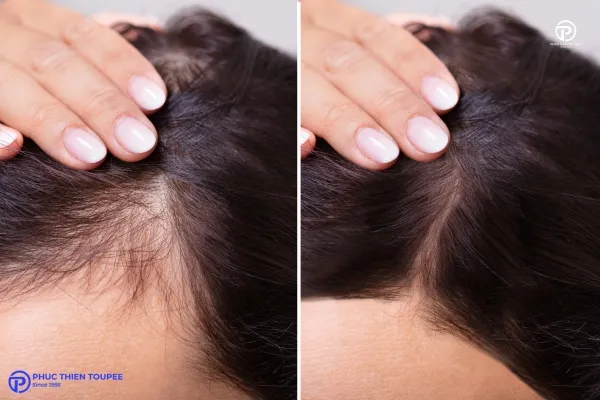
2. Finasteride: A Prescription Medication for Men
Finasteride, available under the brand name Propecia, is an oral medication approved for treating male pattern baldness.
- How Finasteride Works: Mechanism of Action: Finasteride is a 5-alpha-reductase inhibitor.
- Who is Finasteride Suitable For?: Male Pattern Baldness: Exclusively prescribed for men with androgenetic alopecia.
- Dosage and Administration: Standard Dosage: The standard dose is 1 mg taken orally once daily.
- Results and Expectations: Timeframe: It may take 3-6 months to see noticeable results.
- Potential Side Effects: Common Side Effects: Decreased libido, erectile dysfunction, and decreased ejaculate volume.
- Supporting Evidence: A study published in the Journal of the American Academy of Dermatology found that finasteride was effective in reducing hair loss and promoting hair regrowth in men with androgenetic alopecia.

3. Low-Level Laser Therapy (LLLT): Stimulating Hair Follicles with Light
Low-level laser therapy (LLLT), also known as red light therapy or cold laser therapy, involves using low-level lasers or light-emitting diodes (LEDs) to stimulate hair follicles.
- Treatment Options: Laser Caps: Wearable devices that deliver LLLT to the scalp.
- Usage Guide: Follow Product Instructions: Follow the instructions provided by the manufacturer for the specific LLLT device you are using.
- Potential Side Effects: Common Side Effects: LLLT is generally considered safe, with minimal side effects.

4. Platelet-Rich Plasma (PRP) Therapy: Harnessing Your Body’s Healing Power
Platelet-rich plasma (PRP) therapy involves injecting a concentrated solution of platelets, derived from your own blood, into the scalp to stimulate hair growth.
- Potential Side Effects: Common Side Effects: Scalp irritation, redness, swelling, and bruising.
- Supporting Evidence: A study published in the Journal of the American Academy of Dermatology found that PRP therapy was effective in promoting hair growth in men and women with androgenetic alopecia.
5. Microneedling: Stimulating Scalp Rejuvenation
Microneedling involves using a device with fine needles to create micro-injuries on the scalp.
- How Microneedling Works: Mechanism of Action: Microneedling creates micro-injuries on the scalp, triggering the release of growth factors and stimulating collagen production.
- Procedure Guide: Sterilization: The microneedling device is sterilized before use.
6. Hair Loss Medications: Oral Options
Beyond topical treatments like minoxidil and prescription drugs like finasteride, several other oral medications can help combat hair loss.
- Spironolactone: Spironolactone is an oral medication primarily used as a diuretic and to treat high blood pressure.
- Dutasteride: Dutasteride is another oral medication approved for treating benign prostatic hyperplasia (BPH) in men.
- Ketoconazole: Ketoconazole is an antifungal medication available as a shampoo and, in some cases, as an oral medication.
7. Scalp Micro Pigmentation: Creating the Illusion of Hair Density
Scalp micro pigmentation (SMP) is a non-surgical cosmetic procedure that involves tattooing tiny dots onto the scalp to mimic the appearance of hair follicles.
- How Scalp Micro Pigmentation Works: Mechanism of Action: SMP involves injecting pigment into the upper layers of the scalp to create the illusion of hair follicles.
- Who is Scalp Micro Pigmentation Suitable For?: Various Types of Hair Loss: SMP can be used for individuals with androgenetic alopecia, alopecia areata, or other types of hair loss.
- Results and Expectations: Immediate Results: SMP provides immediate results, with the appearance of increased hair density.
- Potential Side Effects: Common Side Effects: Scalp redness or irritation.
Choosing the Right Non-Surgical Hair Loss Treatment for You
Navigating the world of hair loss treatments can be overwhelming.
Choosing the Right Non-Surgical Hair Loss Treatment for You
| Treatment | Ideal For | Key Considerations |
| Minoxidil | Early to moderate hair loss (male & female), androgenetic alopecia | Consistency is key, potential scalp irritation |
| Finasteride | Male pattern baldness, preventing further hair loss | Prescription required, potential side effects on libido |
| LLLT | Androgenetic alopecia (male & female), stimulating hair follicles | Consistent use required, may take time to see results |
| PRP Therapy | Androgenetic alopecia, alopecia areata, stimulating hair growth | Injections required, multiple sessions needed, potential for mild side effects |
| Microneedling | Androgenetic alopecia, alopecia areata, improving absorption of topical treatments | Often combined with other treatments, potential for mild irritation |
| Scalp Micro Pigmentation | Various types of hair loss, creating the illusion of hair density | Cosmetic procedure, touch-ups may be required, choose a skilled practitioner |