

- 17/06/2025
- Posted by: phucthien
- Category: Blog

Topper care for damaged hair is a game-changer for individuals seeking to enhance their appearance while nurturing weakened strands. A well-maintained topper not only boosts confidence but also safeguards the health of your natural hair. Discover expert advice, gentle techniques, and nourishing products to rejuvenate your hairpiece and achieve a flawless, natural look. Elevate your hair care routine with these essential tips for hair systems, hair pieces, and volume boosters.
Understanding Topper Care for Damaged Hair
Why Damaged Hair Toppers Need Special Attention
Damaged hair toppers, whether human hair or synthetic, require delicate handling to prevent further deterioration. The hair strands may be brittle, prone to breakage, or lack their natural shine. Proper care can extend the lifespan of your topper, ensuring it continues to look its best.
Identifying Signs of Damage
- Dryness and Frizz: The hair feels rough and lacks moisture.
- Split Ends: Visible splits at the ends of the hair strands.
- Breakage: Hair snaps easily when handled.
- Lack of Shine: Hair appears dull and lifeless.
- Tangling: Hair becomes easily tangled and difficult to manage.
If you observe any of these signs, it’s crucial to adjust your care routine immediately.
💡 Save money — get expert repair service instead of buying a new one.
Expert Advice from Phuc Thien Toupee
At Phuc Thien Toupee, we understand the unique needs of damaged hair toppers. Our team of experts has developed a comprehensive care guide to help you restore and maintain the beauty of your hairpiece. Let’s dive into practical tips and techniques.

Restore vibrancy: Master Human Hair Topper Care and gentle Topper Brushing22
Essential Topper Care Tips for Damaged Hair
Tip 1: Exceptionally Gentle Washing and Conditioning Techniques
Washing is a fundamental part of topper care, but it’s also a stage where damaged hair is particularly vulnerable to further stress, tangling, and moisture loss. The goal is to cleanse effectively while preserving the integrity and hydration of the hair fibers.
Understanding the Critical Role of Sulfate-Free Products
Sulfates (like Sodium Lauryl Sulfate or Sodium Laureth Sulfate) are powerful detergents commonly found in shampoos. While effective at removing dirt and oil, they are notoriously harsh on hair fibers. Phuc Thien explains that sulfates strip away the hair’s natural protective lipid layer and can lift the cuticle scales, making already damaged hair even drier, more porous, and prone to frizz and breakage. For toppers, which lack natural sebum replenishment, this stripping effect is significantly more detrimental.
- Phuc Thien Recommendation: Always select shampoos and conditioners explicitly labeled “sulfate-free.” Furthermore, look for formulas enriched with hydrating ingredients like glycerin, aloe vera, natural oils (argan, jojoba, coconut), and hydrolyzed proteins (keratin, silk – use protein sparingly if hair feels overly brittle) designed for dry, damaged, or color-treated hair. Consider pH-balanced products (typically pH 4.5-5.5) which help keep the hair cuticle sealed and smooth.
Detailed Step-by-Step Washing Guide for Optimal Gentleness
Execute each step with mindful care, treating the topper hair as you would delicate silk.
- Pre-Wash Detangling (Crucial Step):
- Why: Wet hair is weaker and more elastic than dry hair, making it highly susceptible to stretching and breaking if tangled. Removing knots before water touches the hair is paramount.
- How: Place the topper securely on a wig stand or hold it firmly at the base. Using a wide-tooth comb or a specialized detangling brush designed for extensions/wigs, start gently combing from the ends of the hair, gradually working your way up towards the base. Never force the comb through knots; work them out patiently section by section.
- Phuc Thien Insight: For stubborn tangles, apply a small amount of leave-in conditioner or detangling spray specifically to the knot before combing.
- Lukewarm Water Rinse:
- Why: Hot water can swell the hair shaft excessively, lift the cuticle further, potentially fade color, and contribute to dryness. Cold water may not effectively rinse away product. Lukewarm water (around 98-105°F or 37-40°C) is ideal.
- How: Hold the topper base and let lukewarm water flow over the hair in the direction of the hair growth (from base to ends). This helps prevent tangling and keeps the cuticles smoothed down. Thoroughly saturate the hair.
- Gentle Shampoo Application:
- Why: Vigorous scrubbing creates friction, leading to tangles, frizz, and cuticle damage.
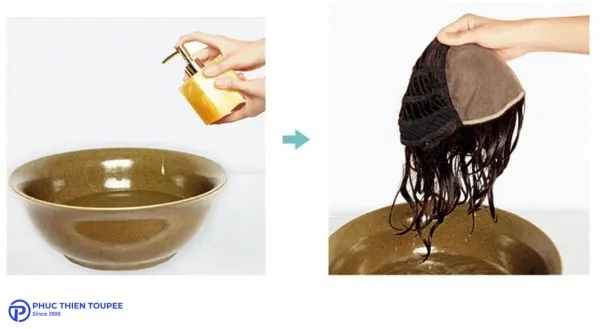
- How: Dispense a small amount (dime to quarter-sized, depending on topper density and length) of sulfate-free shampoo into your palm. Rub your palms together to emulsify the product slightly. Gently smooth the shampoo onto the hair, again working downwards from base to ends. Use light, stroking motions. Do not pile the hair on top of the head or scrub in circular motions. Focus cleansing near the base if needed, but let the suds gently cleanse the lengths and ends as you rinse.
- Thorough Rinsing:
- Why: Leaving shampoo residue can dull the hair, weigh it down, and potentially irritate the scalp area if worn directly.
- How: Rinse meticulously under lukewarm, flowing water, ensuring all traces of shampoo are gone. Again, maintain the downward flow of water. This step might take slightly longer than rinsing your own hair. Lift sections gently to ensure water reaches everywhere.
- Conditioning Application (Focus on Mid-Lengths and Ends):
- Why: Conditioner replenishes moisture, smooths the cuticle, improves manageability, and adds shine. Damaged hair needs this step desperately. Avoid applying conditioner directly to the base knots (if applicable) or the scalp area of the base, as this can potentially loosen knots or cause buildup.
- How: Squeeze out excess water gently (do not wring). Apply a generous amount of moisturizing, sulfate-free conditioner, concentrating on the mid-lengths and ends where damage and dryness are usually most pronounced. Use your fingers or a wide-tooth comb to distribute the conditioner evenly.
- Wait Time: Allow the conditioner to sit for the time recommended on the product label, typically 3-10 minutes. This allows the ingredients to penetrate the hair shaft. For deeper conditioning, see Tip 2.
- Final Rinse:
- Why: Remove excess conditioner to prevent limp, greasy-looking hair. Some prefer a cooler water rinse at this stage to help seal the cuticle further, enhancing shine.
- How: Rinse thoroughly with lukewarm or slightly cooler water, again ensuring water flows downwards. The hair should feel smooth and slippery but not coated.
- Gentle Water Removal and Blotting:
- Why: Rubbing with a standard cotton towel creates excessive friction, roughing up the cuticle and causing frizz and breakage. Wringing stretches fragile, wet hair.
- How: Gently squeeze excess water out, moving downwards. Lay the topper flat on a clean, highly absorbent microfiber towel. Blot the hair gently with the towel – do not rub. You can also wrap the hair loosely in the microfiber towel for a few minutes to absorb more moisture. Microfiber towels are smoother and absorb water more effectively with less friction than traditional terrycloth.
Frequency Considerations for Damaged Toppers
- General Guideline: Phuc Thien advises washing a human hair topper less frequently than your own hair, typically every 7-14 wears, or when it starts to look dull, feels dirty, or has product buildup.
- Damaged Hair Specifics: Over-washing strips away necessary moisture, exacerbating damage. Assess the need based on appearance and feel rather than a strict schedule. Factors like your environment (dusty, humid), use of styling products, and personal perspiration levels will influence frequency. If you wear your topper daily and use products, you might need to wash it closer to the 7-wear mark. If worn occasionally with minimal products, you can extend the time significantly.
Tip 2: Intensive Nourishing Treatments and Consistent Hydration
Damaged hair has a compromised structure, often with gaps in the cuticle layer and reduced internal moisture. Restoring and maintaining hydration is paramount to improving its appearance, feel, and resilience. This goes beyond basic conditioning.
The Power of Deep Conditioning Masks (Masques)
Deep conditioners or hair masks contain higher concentrations of conditioning agents, emollients, humectants, and sometimes reparative ingredients (like ceramides or amino acids) than regular conditioners. They are designed to penetrate deeper into the hair shaft.
- What They Do: Replenish lost moisture and lipids, smooth the roughened cuticle layer, improve elasticity (reducing breakage), enhance softness, and add shine.
- Choosing the Right Mask: Look for masks rich in natural oils (argan, shea, avocado, macadamia), butters (shea, cocoa), hydrolyzed proteins (keratin, silk, wheat – use cautiously if hair feels very brittle, as too much protein can sometimes increase brittleness), and ceramides. Phuc Thien suggests rotating between purely moisturizing masks and those with some reparative proteins for balanced care, unless your hair feels consistently straw-like (then focus primarily on moisture).
- Detailed Application Process:
- Start Clean: Apply the mask after shampooing (and rinsing thoroughly), usually in place of your regular conditioner, to towel-blotted, damp hair.
- Apply Generously: Section the hair and apply the mask liberally, ensuring even saturation from mid-lengths to ends. Avoid the base.
- Enhance Penetration (Optional but Recommended): Cover the topper with a disposable plastic shower cap or wrap it loosely in plastic wrap. Applying gentle, indirect heat (like wrapping a warm, damp towel around the plastic-covered topper, or using a bonnet hair dryer on a low setting for 10-15 minutes) can help open the cuticle and allow the mask to penetrate more effectively. Caution: Avoid direct high heat.
- Processing Time: Leave the mask on for the duration specified on the product, typically 15-30 minutes (or longer for very damaged hair, if recommended by the product).
- Rinse Thoroughly: Rinse completely with lukewarm or cool water until the hair feels smooth but not greasy.
- Frequency: For moderately damaged hair, Phuc Thien recommends a deep conditioning treatment once every 2-4 weeks. For severely damaged hair, weekly treatments may be beneficial initially, tapering off as the hair’s condition improves. Listen to your hair – if it starts feeling limp or overly soft, reduce the frequency.

Leveraging Leave-In Conditioners and Hydrating Oils/Serums
These products provide ongoing moisture, protection, and manageability between washes.
- Leave-In Conditioners: Typically lighter than rinse-out conditioners, they offer detangling benefits, hydration, frizz control, and sometimes UV protection. Look for spray or lotion formulas. Apply sparingly to damp, towel-dried hair before combing or styling. Focus on ends.
- Hair Oils/Serums: These primarily work to seal the cuticle, lock in moisture applied previously (from conditioners/masks), reduce frizz, add shine, and provide thermal protection (if formulated for it).
- Types: Some oils penetrate (like coconut, argan in smaller molecule forms), while others primarily coat and seal (like mineral oil, heavier silicones). A blend is often effective.
- Application: Use very sparingly (1-3 drops) on damp or dry hair, focusing primarily on the ends. Rub the oil between your palms first, then smooth it over the hair surface. Too much oil can make the topper look greasy and attract dirt.
- Phuc Thien Tip: For fine hair toppers, choose lightweight oils or serums to avoid weighing the hair down. Thicker, coarser hair can handle slightly heavier products.
- Frequency: Leave-in conditioners can often be used after every wash. Oils/serums can be used after washing on damp hair, and/or daily in tiny amounts on dry ends to combat dryness and frizz.
Tip 3: Mindful Styling and Rigorous Heat Protection
Styling practices, particularly those involving heat, can inflict significant damage or worsen existing damage if not done carefully. Protecting the hair fibers during styling is non-negotiable for damaged toppers.
Prioritizing Heat Minimization
- The Damage Mechanism: Heat styling tools (flat irons, curling wands, blow dryers on hot settings) work by breaking down temporary hydrogen bonds in the hair to reshape it. Excessive or repeated heat permanently damages the hair’s protein structure (keratin), causes moisture to rapidly evaporate (even boil within the cortex), cracks the cuticle, and leads to irreversible dryness, brittleness, and breakage.
- Phuc Thien’s Strong Recommendation: Embrace heat-free styling whenever possible. Allow the topper to air dry completely (see below). Explore heatless styling methods like using foam rollers, braiding damp hair for waves, or pin curls. Reserve heat styling for special occasions or necessary touch-ups rather than daily use.
The Absolute Necessity of Heat Protection Sprays
When heat styling is unavoidable, a quality heat protectant spray is your first line of defense.
- How They Work: These products form a protective barrier on the hair shaft, helping to distribute heat more evenly, reduce the rate of heat penetration, and minimize moisture loss. Many contain silicones (like dimethicone or cyclomethicone), polymers, and moisturizing agents.
- Application is Key:
- Apply Before Heat: Spray evenly onto damp hair before blow-drying, or onto dry hair section by section immediately before using a flat iron or curling iron.
- Ensure Coverage: Don’t just spritz the surface. Lift sections and spray lightly underneath as well.
- Comb Through: Use a wide-tooth comb to distribute the product evenly from roots to ends.
- Allow to Dry/Absorb: Let the product absorb for a moment before applying heat, especially if applying to dry hair. Never apply high heat to soaking wet hair, even with a protectant.
- Phuc Thien Selection Tip: Choose a heat protectant rated for the temperature range you plan to use (many protect up to 450°F or 230°C, but you should aim much lower). Look for added benefits like hydration or frizz control.
🔧 Don’t throw it away — let us restore your old toupee to like-new condition!
Implementing Low-Heat Styling Techniques
If using heat tools:
- Lowest Effective Temperature: Always start with the lowest heat setting on your tool that achieves the desired result. For damaged hair, Phuc Thien advises staying below 300°F (150°C) whenever possible. Many professional tools have adjustable digital temperature controls – use them wisely.
- Quality Tools: Invest in styling tools with ceramic, tourmaline, or titanium plates/barrels, which tend to distribute heat more evenly and smoothly than basic metal ones, reducing the risk of hot spots and snagging.
- Quick Passes: Keep the tool moving. Do not clamp down on one section of hair for extended periods. One or two quick, smooth passes should be sufficient.
- Work on Dry Hair: Ensure the hair is 100% dry before using flat irons or curling irons (unless using a specific wet-to-dry tool, which is generally not recommended for delicate toppers).

Mastering Air Drying and Gentle Styling Practices
- Optimal Air Drying: After blotting with a microfiber towel, place the topper on a sturdy wig stand that allows for air circulation around the base and hair. Keep it out of direct sunlight. Apply a leave-in conditioner to aid detangling and reduce frizz as it dries. Avoid touching or manipulating the hair too much while it’s drying, as this can disrupt the cuticle and cause frizz. If you need to speed things up slightly, use a blow dryer only on the cool shot setting with a diffuser attachment, held at a distance.
- Tool Selection: Use wide-tooth combs for detangling (especially when wet) and brushes with smooth, flexible bristles (like boar bristle mix or specific wig brushes). Avoid metal-core round brushes when blow-drying, as they can overheat. Seamless combs are less likely to snag hair.
- Gentle Handling: Always handle the topper with care. Detangle from ends to roots. Avoid tight hairstyles (ponytails, braids) that put excessive tension on the hair fibers or the base construction, especially near the front edge. When brushing or combing, hold the hair firmly near the base to prevent pulling.
- Protective Styling: If you need to secure the hair (e.g., overnight if storing briefly off a stand), consider loosely braiding it or wrapping it in a silk or satin scarf/bonnet to minimize friction and tangling.
Additional Tips for Damaged Hair Topper Care
Secure and Protective Storage Solutions
How you store your topper when not wearing it directly impacts its condition and lifespan. Improper storage leads to tangling, dust accumulation, loss of shape, and unnecessary friction.
- The Ideal Setup: Wig Stand:
- Benefits: A wig stand (styrofoam head, canvas block head, or even a simple collapsible stand) is the best way to maintain the topper’s shape and style, prevent crushing, and allow air to circulate, keeping it fresh. Canvas block heads are particularly useful for styling and washing processes.
- Placement: Keep the stand in a cool, dry place away from direct sunlight (which can fade color and degrade fibers) and areas with excessive dust or humidity. A closet shelf or inside a cabinet works well.
- Phuc Thien Tip: Ensure the stand is stable to prevent the topper from falling. For long-term storage, loosely covering the topper on the stand with a light silk scarf or placing it inside a breathable storage bag can offer extra dust protection.
- Alternative: Silk or Satin Storage Bag:
- Why Silk/Satin: If a stand isn’t practical (e.g., for travel or limited space), store the completely dry and detangled topper inside a bag made of silk or satin. These materials have a smooth surface that minimizes friction against the hair cuticles, reducing tangling and static compared to cotton or plastic bags. They also help retain moisture better than more absorbent fabrics.
- Preparation: Before placing in the bag, ensure the topper is tangle-free. You might loosely braid long hair or secure it gently with a silk scrunchie. Lay it carefully inside the bag, avoiding folding or crushing the base.
- What to Avoid: Never store a topper damp (promotes mold/mildew), balled up, in direct sunlight, near heat sources, or in plastic bags long-term (can trap moisture and lack breathability).
The Importance of Regular, Precise Trimming
Just like biological hair, the ends of topper hair can become dry, split, and damaged over time, even with excellent care.
- Why Trim Damaged Toppers: Split ends don’t just look unsightly; they can travel up the hair shaft, causing further damage and breakage along the length of the fiber. Regular trimming (often called “dusting” when only removing the very ends) removes these damaged tips, preventing further splitting, maintaining the overall shape and style, and helping the topper look healthier and fuller.
- Frequency Guidance: Phuc Thien generally recommends a light trim every 6-8 weeks of regular wear. However, this depends heavily on the initial condition of the hair, your wear frequency, and your care routine. Inspect the ends regularly; if you notice significant dryness, split ends, or excessive tangling at the tips, it might be time for a trim, even if it hasn’t been 6-8 weeks.
- Professional Expertise is Highly Recommended: While trimming seems simple, cutting topper hair requires precision. The hair doesn’t grow back, so mistakes are permanent. A professional stylist experienced with wigs and toppers understands how the hair falls, how to maintain the original style, and how to blend the trim naturally.
- Finding the Right Stylist: Seek recommendations or look for stylists who explicitly list wig/topper cutting services. Bring your topper to the consultation.
- What to Ask For: Clearly communicate that you only want the damaged ends removed (“a dusting”) to preserve length as much as possible while improving health.
🧵 Every stitch, every strand — we take care of every detail.
Seeking Professional Consultation and Maintenance
Sometimes, despite your best efforts, you may encounter challenges or simply want expert guidance tailored to your specific topper and lifestyle.
- When to Consult Phuc Thien or a Specialist:
- Persistent Issues: If you’re struggling with persistent dryness, tangling, frizz, or matting despite following care guidelines.
- Product Uncertainty: If you’re unsure which products are best suited for your topper’s specific fiber type, color treatment history, or damage level.
- Base Issues: If you notice damage to the topper base (rips, stretching, loose clips).
- Color Correction/Refresh: If the color has faded significantly or needs toning. Professional coloring is highly recommended over DIY attempts, which can easily cause further damage.
- Revitalization Services: Many specialists (including Phuc Thien Toupee) offer professional deep conditioning, revitalization, or repair services that can sometimes restore toppers that seem beyond home care.
- Initial Setup and Customization: When first getting a topper, a consultation can help with fitting, cutting to blend with your bio hair, and personalized care instructions.
- The Value of Expert Advice: A professional consultation provides personalized recommendations based on a direct assessment of your topper’s condition. They can demonstrate techniques, suggest specific products available in your region, and offer solutions tailored to your wear habits and environment. This aligns with the E-E-A-T principles, ensuring you receive expert, authoritative, and trustworthy guidance for your specific situation. Phuc Thien Toupee encourages clients to reach out for support, viewing it as a partnership in maintaining the beauty and longevity of their hairpiece.
Year-round protection: Learn crucial Summer Topper Care and Winter Topper Care tips
Addressing Specific Concerns
Washing a Topper with Damaged Hair: Step-by-Step
As discussed in Tip 1, gentle washing is essential. Remember:
- Always detangle first.
- Use lukewarm water.
- Apply sulfate-free shampoo and conditioner gently.
- Blot dry, don’t rub.
Styling a Topper with Damaged Hair: Dos and Don’ts
- Do: Use heat protection spray, low-heat settings, and gentle styling tools.
- Don’t: Overuse heat, pull or tug on the hair, or use harsh styling products.
Maintaining a Damaged Hair Topper: Routine Essentials
- Gentle washing and conditioning
- Deep conditioning treatments
- Leave-in conditioners and oils
- Heat protection
- Proper storage
- Regular trimming
Conclusion
Caring for a damaged hair topper requires patience, dedication, and the right techniques. By following the tips and advice provided by Phuc Thien Toupee, you can restore your topper’s beauty, extend its lifespan, and regain your confidence.
Phuc Thien Toupee Co., Ltd
Design Brand: Royal Hair Vietnam
Office Address:
🏢 Room A909, Decapella Building, 116 Luong Dinh Cua Street, An Khanh Ward, Thu Duc City, Ho Chi Minh City 700000, Vietnam
Factory Address:
🏭 No. 26/9, Street 57, Thuong Hamlet, Tan Thong Hoi Ward, Cu Chi District, Ho Chi Minh City 700000, Vietnam
Email: ✉️ phucthientoupeevn@gmail.com
Phone / WhatsApp: 📞 +84 933 901 196
Websites: 🌐 phucthientoupee.com – 🌐 royalhair.shop



