

- 27/06/2025
- Posted by: phucthien
- Categories: Blog, Styling, Color & Lifestyle

5 Key Differences Between Layers vs No Layers in Hairpieces
Layers vs No Layers, that’s the question!
Understanding Hairpiece Construction
Base Material: The base is the foundation to which the hair strands are attached.

1. Visual Impact: Layers vs No Layers
The initial impression a hairpiece makes is significantly shaped by the presence or absence of layers.
- Layers: Crafting Dimension and Softness: Layered hairpieces are designed with hair strands cut at varying lengths throughout the piece. Creating Volume and Body: Shorter layers underneath provide support for longer layers on top.
- No Layers: Embracing Sleekness and Definition: Non-layered hairpieces, often referred to as blunt cut, one-length, or solid form styles, feature hair strands cut to a uniform length, or with very minimal variation. Delivering Sleekness and Polish: The uniform length creates a smooth, cohesive surface.
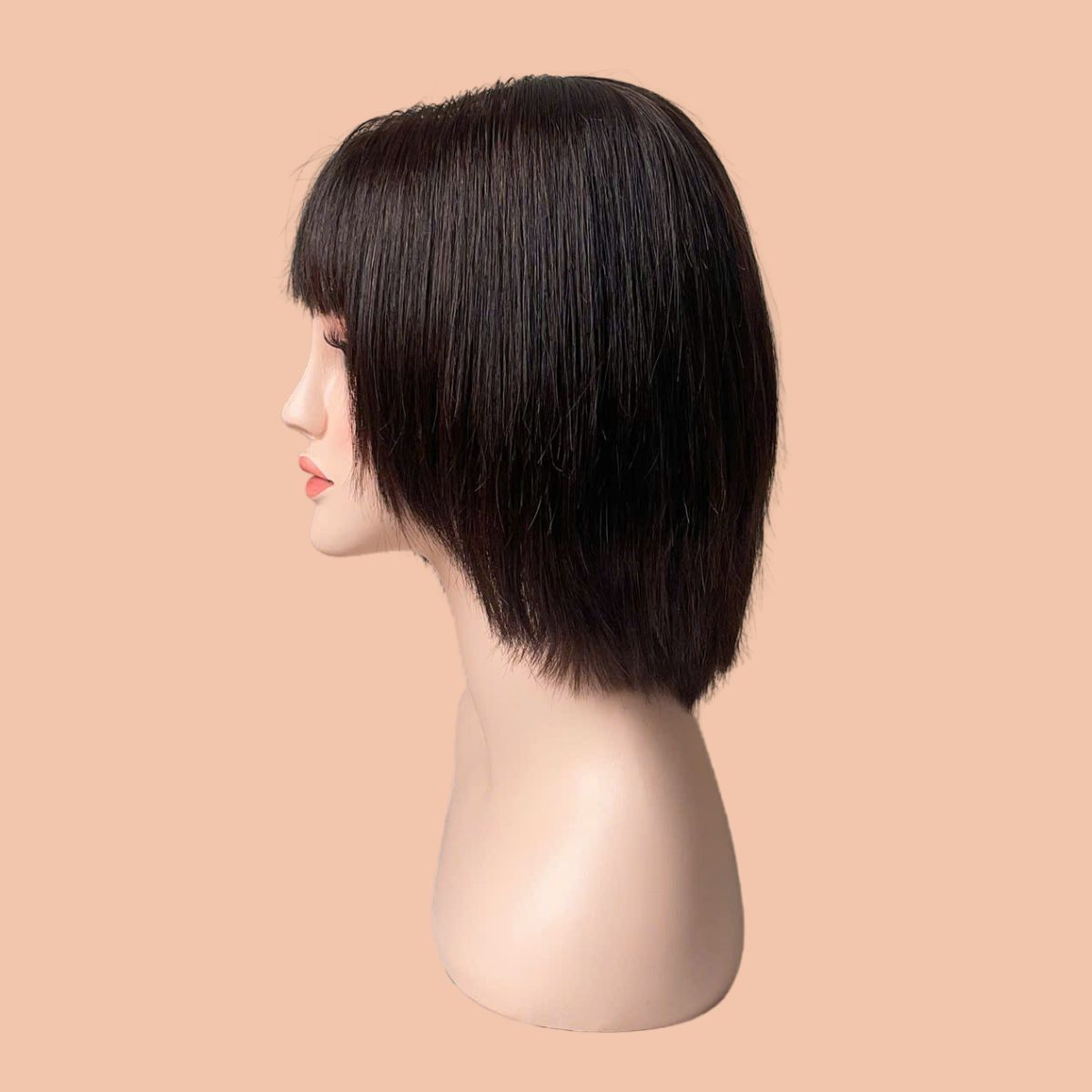
2. Styling Versatility: Layers Offer More Options
While both layered and non-layered hairpieces can be styled, the inherent structure of layers provides a broader canvas for diverse looks, especially those involving texture and volume.
- Styling Layered Hairpieces: A World of Possibilities: Effortless Waves and Curls: Layers help curls and waves form more easily and hold their shape better.
- Styling Non-Layered Hairpieces: Precision and Polish: Sleek and Straight Perfection: These styles are ideal for flat ironing to achieve a glass-like, super-straight finish.

3. Maintenance and Upkeep: Which is Easier?
When considering ease of care, non-layered hairpieces often have a slight edge due to their uniformity, but proper maintenance techniques are crucial for both styles to ensure longevity and appearance.
- Maintaining Layered Hairpieces: Addressing Tangles and Shape: Detangling Diligence: Layers, especially finer hair or longer layers, can be more prone to tangling simply because hairs of different lengths have more opportunity to rub against each other and intertwine. Technique: Always use a wide-tooth comb or a brush specifically designed for hairpieces. Trimming: Regular professional trimming (e.g., every 6-10 weeks of regular wear for human hair, less frequently for synthetic) is often necessary to maintain the intended shape of the layers and remove any damaged ends.
- Maintaining Non-Layered Hairpieces: Simplicity and Precision: Easier Detangling: With all hairs being the same length, there’s less friction and fewer opportunities for complex tangles to form compared to layered styles. Detangling is usually quicker and requires less meticulous sectioning.

4. Natural Look and Feel: Achieving Realism
Both layered and non-layered hairpieces can achieve a high degree of realism. Success depends less on the cut itself and more on the quality of materials, construction, and how well the style integrates with the wearer.
- Achieving Realism with Layered Hairpieces: Mimicking Natural Variation: Very few people have hair that grows to one perfect, uniform length naturally. Biological hair usually has slight variations, breakage, and regrowth, creating subtle layering. Movement is Key: As mentioned before, the way layers allow hair to move, swing, and catch light is very similar to natural hair.
- Achieving Realism with Non-Layered Hairpieces: Precision Cutting: The defining feature is the uniform length. Realism hinges on this cut being perfectly executed – sharp, even, and precise. Layers offer realism through movement and variation, while non-layered styles offer realism through precision and polish.
5. Cost and Longevity: What to Expect
The price and lifespan of a hairpiece are influenced by a combination of factors, with the choice between layers and no layers playing a relatively minor role compared to material quality and construction.
- Cost Considerations: Layers vs. No Layers: Material is King: The biggest drivers of cost are the hair type and base material. Hair Type: Virgin Remy human hair (never processed) is the most expensive, followed by Remy human hair, then non-Remy human hair, and finally synthetic fibers (with heat-friendly synthetics often costing more than basic ones).
- Longevity Expectations: How Layers Might Indirectly Influence Lifespan: The cut style itself (layered vs. non-layered) does not directly determine how long a hairpiece will last. Hair Quality: High-quality Remy human hair, with proper care, can last significantly longer (6 months to over a year of regular wear) than standard synthetic hair (typically 3-6 months).
- Indirect Influence of Layers/No Layers on Longevity: Maintenance Habits: As discussed, layered pieces can tangle more easily.
Choosing the Right Hairpiece: A Step-by-Step Guide
Determine Your Face Shape: Understanding your face shape will help you choose a style that flatters your features. Choose a Hair Type: Decide whether you prefer human hair or synthetic fibers.
Achieving Realism with Non-Layered Hairpieces
| Realism Factor | Layered Hairpiece | Non-Layered Hairpiece |
| Mimics Natural Hair | Replicates natural growth patterns & movement | Relies on precision cut & hair quality for realism |
| Movement | High degree of natural movement enhances realism | Less inherent movement, realism from sleekness |
| Blending | Layers aid seamless blending with biological hair | Requires precise color match and edge placement |
| Key to Success | Skillful, soft, blended layering; hair quality | Precise cut; high hair quality (shine, texture) |
| Base Importance | Crucial (Lace front, Mono top) | Crucial (Lace front, Mono top) |
| Density | Needs natural distribution, avoids bulk | Needs natural distribution, avoids bulk |
| Potential Pitfalls | Choppy/uneven layers look artificial | Uneven cut, dull/poor quality hair looks artificial |