

- 07/05/2025
- Posted by: phucthien
- Category: Blog

Hairpieces for alopecia offer a transformative solution, restoring confidence and empowering individuals to embrace their desired appearance. Exploring various hair replacement systems can lead you to a style that feels authentically you, providing a boost in self-esteem and a renewed sense of well-being. Let’s delve into the world of hairpieces, wigs, and cranial prosthesis to discover the perfect match for your unique needs and preferences, from affordable options to high-quality custom designs. This journey to rediscover confidence involves exploring hair systems, hair prosthetics, and non-surgical hair restoration.
Alopecia affects millions worldwide, and finding the right hair solution can be life-changing. Phucthien is committed to guiding you through the process, providing expert advice and support to help you find the ideal hairpiece that fits your lifestyle, budget, and aesthetic goals.
Understanding Alopecia and Hair Loss
Alopecia is a broad term for hair loss, encompassing various forms with different causes and patterns. Understanding the specific type of alopecia is crucial for choosing the most effective hairpiece.
Types of Alopecia: A Brief Overview
- Alopecia Areata: An autoimmune condition causing patchy hair loss. The National Alopecia Areata Foundation (NAAF) estimates that it affects approximately 6.8 million people in the US.
- Alopecia Totalis: Complete loss of hair on the scalp.
- Alopecia Universalis: Complete loss of hair on the scalp and body.
- Androgenetic Alopecia (Male/Female Pattern Baldness): A genetically determined condition causing gradual hair thinning. The American Academy of Dermatology estimates that over 50% of men and women experience noticeable hair loss by age 50.
- Traction Alopecia: Hair loss caused by tight hairstyles that pull on the hair follicles.
- Cicatricial Alopecia (Scarring Alopecia): Hair loss caused by inflammation that destroys hair follicles and replaces them with scar tissue.
- Telogen Effluvium: Temporary hair loss caused by stress, illness, or medication.

The Emotional Impact of Hair Loss
Hair loss can significantly impact self-esteem, body image, and overall quality of life. A study published in the International Journal of Dermatology found that individuals with alopecia areata reported higher levels of anxiety and depression compared to those without the condition. Finding the right hairpiece can be an empowering step towards regaining confidence and feeling like yourself again. At Phucthien, we understand the emotional toll hair loss can take, and we are dedicated to providing compassionate and supportive guidance.
🎨 Your style, your hair — we make it exactly how you want.
8 Effective Hairpieces for Alopecia
Here are eight effective hairpiece options to consider, along with their pros, cons, and considerations for different alopecia types:
Lace Front Wigs
- Description: Lace front wigs feature a sheer lace hairline that creates a natural-looking appearance. The individual hairs are hand-tied to the lace, mimicking the look of natural hair growth.
- Pros: Highly realistic hairline, versatile styling options (can be parted in different directions), comfortable to wear.
- Cons: Can be more expensive than other types of wigs, require careful application and maintenance to avoid damage to the lace.
- Best for: Alopecia areata (especially if only affecting the front hairline), androgenetic alopecia.
- Example: A woman with androgenetic alopecia who wants a natural-looking hairline for special occasions.
- Application: Ensure the lace is trimmed to match your hairline. Use a skin-safe adhesive to secure the wig.

Monofilament Wigs
- Description: Monofilament wigs have a fine mesh cap that allows your scalp to breathe. Individual hairs are hand-tied to the mesh, creating the illusion of hair growing directly from the scalp.
- Pros: Very comfortable, breathable, natural-looking scalp, versatile styling options.
- Cons: Can be more expensive than other types of wigs.
- Best for: Individuals with sensitive scalps or those undergoing chemotherapy.
- Example: A person undergoing chemotherapy who needs a comfortable and breathable wig.
- Construction: The monofilament part allows for multi-directional styling, making it look more natural.
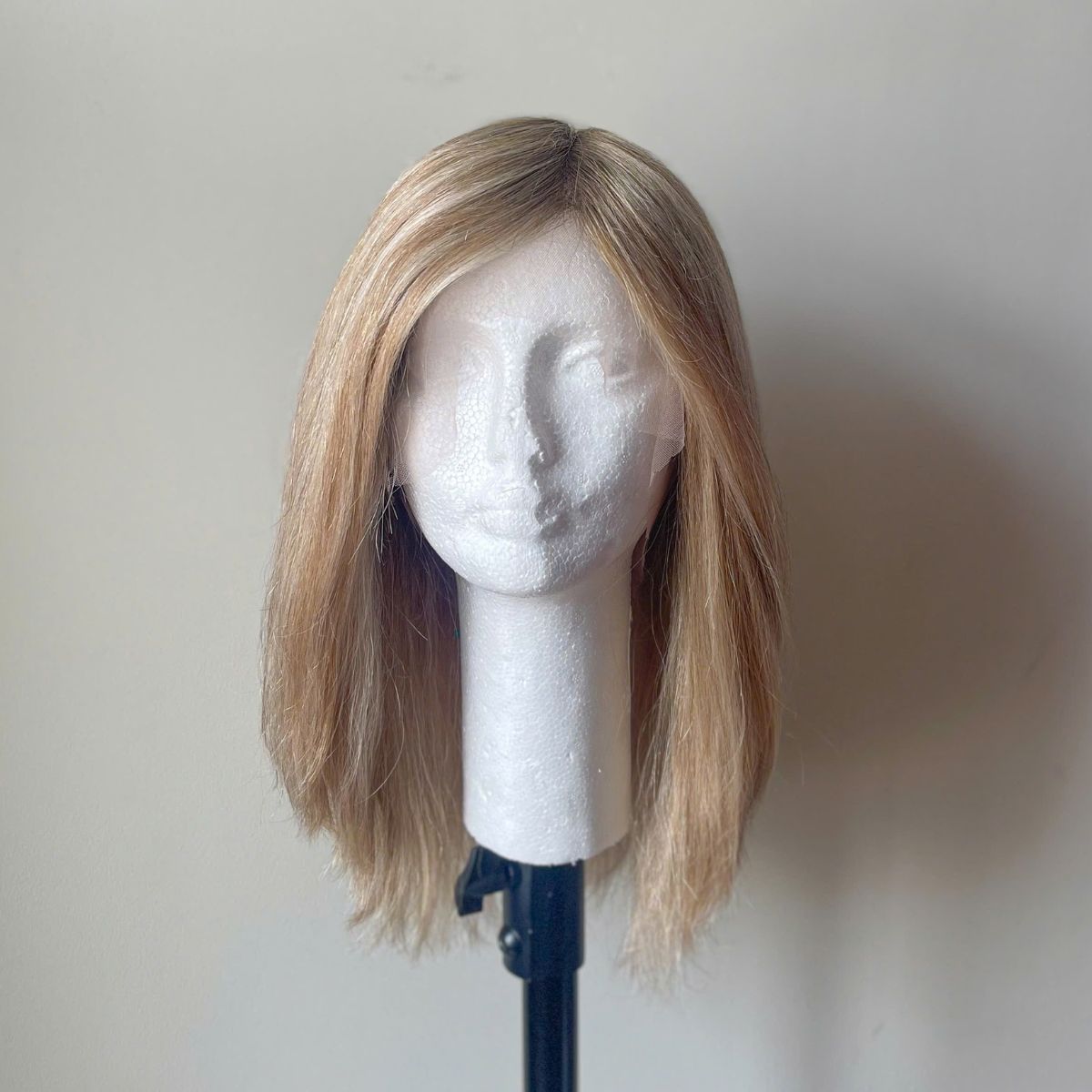
Full Lace Wigs
- Description: The entire wig cap is made of lace, allowing for maximum versatility in styling and parting.
- Pros: Most natural-looking option, can be styled in any direction, can be worn in high ponytails or updos.
- Cons: Most expensive type of wig, requires the most maintenance and skill to apply and wear correctly.
- Best for: Alopecia totalis or universalis, individuals who want maximum styling flexibility.
- Example: Someone with alopecia universalis who wants to be able to wear their hair in a variety of styles.
- Attachment: Often attached using adhesive or tape around the entire perimeter of the head.

💁♀️ Add instant volume and confidence — browse our stock hair toppers for women!
Synthetic Wigs
- Description: Wigs made from synthetic fibers.
- Pros: More affordable than human hair wigs, easy to maintain, pre-styled and ready to wear.
- Cons: Can look less natural than human hair wigs, limited styling options (cannot be heat-styled unless made from heat-resistant fibers), shorter lifespan than human hair wigs.
- Best for: Individuals on a budget, those who want a low-maintenance option.
- Example: A student with alopecia areata who needs an affordable and easy-to-care-for wig.
- Cost: Ranges from $50-$300.
Human Hair Wigs
- Description: Wigs made from human hair.
- Pros: Most natural-looking option, can be styled with heat tools, long lifespan, can be colored.
- Cons: More expensive than synthetic wigs, require more maintenance (washing, conditioning, styling).
- Best for: Individuals who want the most realistic look and styling versatility.
- Example: A professional woman with androgenetic alopecia who wants a wig that looks and feels like her natural hair.
- Quality: Remy human hair is considered the highest quality.
Toppers/Hair Pieces
- Description: Smaller hairpieces designed to cover specific areas of hair loss, such as the crown or part.
- Pros: Lightweight, easy to attach, blend seamlessly with existing hair.
- Cons: Only suitable for localized hair loss, may not be secure enough for active lifestyles.
- Best for: Androgenetic alopecia, early stages of alopecia areata.
- Example: A man with thinning hair at the crown who wants to add volume and coverage.
- Attachment Methods: Clips, tape, or adhesive.

Cranial Prosthesis
- Description: A custom-made hairpiece specifically designed for individuals with medical hair loss. Often considered a medical device.
- Pros: Very secure, comfortable, and natural-looking, can be covered by insurance in some cases.
- Cons: More expensive than standard wigs, requires a professional fitting.
- Best for: Alopecia totalis or universalis, individuals with sensitive scalps, those undergoing cancer treatment.
- Example: A woman with alopecia totalis who wants a comfortable and secure hairpiece that looks and feels natural.
- Insurance Coverage: Check with your insurance provider to see if a cranial prosthesis is covered.
Integrated Hair Systems:Description: Hair systems that are integrated with existing hair, often involving weaving or bonding techniques.
- Pros: Very secure, can be worn for extended periods, natural-looking.
- Cons: Can be damaging to existing hair, requires professional maintenance, can be expensive.
- Best for: Individuals with some existing hair who want a permanent or semi-permanent solution.
- Example: Someone with androgenetic alopecia who wants a more permanent hair replacement option.
- Maintenance: Requires regular salon visits for tightening and adjustments.
Your guide: Uncover Alopecia Types and Hairpieces, Alopecia Hairpiece Pros & Cons, and answers in Alopecia Hairpieces FAQs.
Choosing the Right Hairpiece: Key Considerations
Selecting the right hairpiece involves several key factors:
- Type of Alopecia: Different types of alopecia require different solutions. For example, a full lace wig is ideal for alopecia totalis, while a topper might be sufficient for androgenetic alopecia.
- Lifestyle: Consider your activity level and daily routines. If you lead an active lifestyle, you’ll need a more secure and durable hairpiece.
- Budget: Hairpieces range in price from affordable synthetic wigs to expensive custom-made cranial prosthesis. Determine your budget and explore options within that range.
- Hair Color and Style: Choose a hairpiece that matches your natural hair color and desired style. Consider the texture, length, and density of the hair.
- Cap Construction: The cap construction is crucial for comfort and breathability. Monofilament and lace front caps are good options for sensitive scalps.
- Attachment Method: Consider the different attachment methods and choose one that suits your needs and preferences. Options include clips, tape, adhesive, and weaving.
- Maintenance: Different hairpieces require different levels of maintenance. Synthetic wigs are generally easier to care for than human hair wigs.
- Personal Preference: Ultimately, the best hairpiece is the one that makes you feel confident and comfortable.
 Table: Hairpiece Comparison
| Feature | Lace Front Wig | Monofilament Wig | Full Lace Wig | Synthetic Wig | Human Hair Wig | Topper | Cranial Prosthesis | Integrated System |
| Realism | High | High | Highest | Medium | Highest | Medium | High | High |
| Comfort | Medium | High | Medium | Medium | Medium | High | Highest | Medium |
| Versatility | High | High | Highest | Low | High | Low | Medium | Medium |
| Durability | Medium | Medium | Medium | Low | High | Medium | High | High |
| Cost | Medium | Medium | High | Low | High | Low | High | High |
| Maintenance | Medium | Medium | High | Low | High | Low | Medium | High |
| Attachment | Adhesive | Adhesive | Adhesive | Clips/Elastic | Clips/Adhesive | Clips/Tape | Adhesive | Weaving/Bonding |
| Best For | Frontal Alopecia | Sensitive Scalp | Alopecia Totalis | Budget-Friendly | Natural Look | Localized Loss | Medical Hair Loss | Some Existing Hair |
Where to Buy Hairpieces for Alopecia in the US
Finding a reputable supplier is crucial for a positive experience. Here are some options:
- Specialty Wig Shops: These shops offer a wide selection of wigs and hairpieces, along with expert fitting and styling services. Look for shops that specialize in medical hair loss.
- Online Retailers: Many online retailers offer a wide variety of hairpieces at competitive prices. Be sure to read reviews and check the return policy before making a purchase.
- Salons: Some salons offer hair replacement services, including wig fitting and styling.
- Medical Supply Stores: Some medical supply stores carry cranial prosthesis and other hairpieces for medical hair loss.
- Phucthien Toupee: Phucthien offers personalized consultations to help you find the perfect hairpiece for your needs. We provide high-quality wigs and hair systems designed for comfort, realism, and durability.
Alopecia hairpieces can be a significant investment, but there are ways to find affordable options:
- Synthetic Wigs: Synthetic wigs are generally less expensive than human hair wigs.
- Sales and Discounts: Look for sales and discounts at wig shops and online retailers.
- Used Wigs: Consider purchasing a gently used wig.
- Financial Assistance: Some organizations offer financial assistance to individuals with alopecia. Check with the NAAF and other alopecia support groups for resources.
- Insurance Coverage: Explore if your insurance policy covers cranial prosthesis for medical hair loss.
✨ A toupee shouldn’t just hide hair loss — make it a style statement!
Caring for Your Hairpiece
Proper care is essential to extend the lifespan and maintain the appearance of your hairpiece.
Washing and Conditioning
- Follow the manufacturer’s instructions for washing and conditioning your hairpiece.
- Use gentle, sulfate-free shampoo and conditioner.
- Wash synthetic wigs less frequently than human hair wigs.
- Avoid rubbing or twisting the hairpiece during washing.

Styling
- Use heat-safe styling tools on human hair wigs.
- Avoid using excessive heat, which can damage the hair fibers.
- Use a wide-tooth comb or wig brush to detangle the hair.
Storage
- Store your hairpiece on a wig stand or mannequin head to maintain its shape.
- Keep your hairpiece away from direct sunlight and heat.
- Store your hairpiece in a cool, dry place.
Active life, no worries: Tips for Traveling with Alopecia Hairpieces, Exercising with Alopecia Hairpieces, and specific Alopecia Areata Hairpiece solutions.
Conclusion: Embrace Confidence with the Right Hairpiece
Finding the right hairpiece for alopecia can be a transformative experience. With so many options available, it’s possible to find a solution that meets your individual needs, preferences, and budget. Phucthien is dedicated to helping you navigate the world of hair replacement and find the perfect hairpiece to restore your confidence and empower you to live your best life. Schedule a consultation with us today and let us help you rediscover your beautiful self.
Phuc Thien Toupee Co., Ltd
Design Brand: Royal Hair Vietnam
Office Address:
🏢 Room A909, Decapella Building, 116 Luong Dinh Cua Street, An Khanh Ward, Thu Duc City, Ho Chi Minh City 700000, Vietnam
Factory Address:
🏭 No. 26/9, Street 57, Thuong Hamlet, Tan Thong Hoi Ward, Cu Chi District, Ho Chi Minh City 700000, Vietnam
Email: ✉️ phucthientoupeevn@gmail.com
Phone / WhatsApp: 📞 +84 933 901 196
Websites: 🌐 phucthientoupee.com – 🌐 royalhair.shop



